DuPage County Property Taxes Are Due September 1: What Naperville Sellers Need to Know
How Much Are DuPage County Property Taxes in 2026, and When Are They Due?
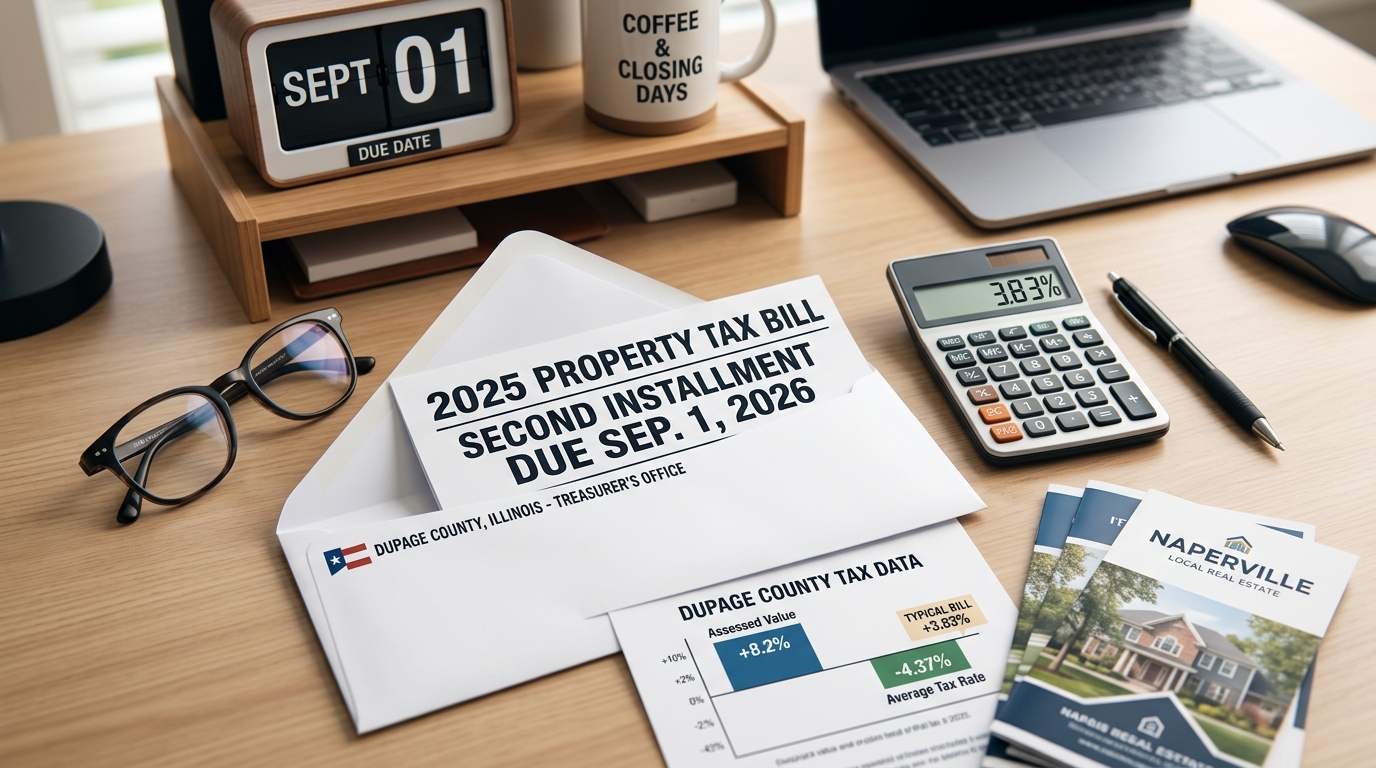
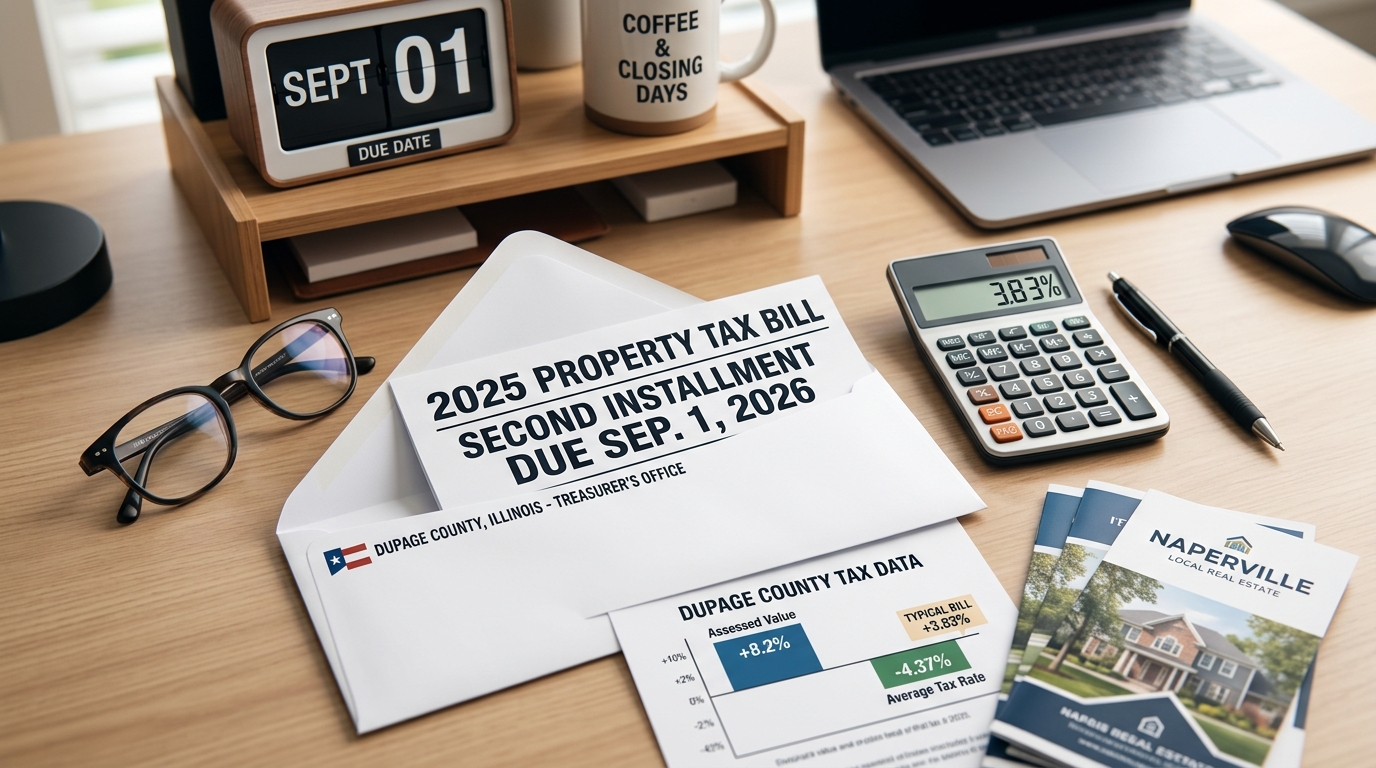
DuPage County mailed roughly 322,000 property tax bills for the 2025 tax year on April 29, 2026, with the second installment due September 1, 2026. County-wide, assessed values rose 8.2% while the average tax rate fell 4.37%, landing the typical bill about 3.83% higher than last year. If you're selling or buying in Naperville or another DuPage County suburb, that bill lands squarely in the middle of your net proceeds calculation or your buyer's monthly payment, right as the deadline hits.
By the Constellation Home Sales Team | August 26, 2026
If a DuPage County tax bill showed up in your mailbox this spring, you're one of roughly 322,000 property owners in the same position. The first installment was due back on June 1. The second installment comes due September 1, less than a week from today, and it's the number that tends to catch people off guard mid-transaction: sellers wondering how it affects their closing statement, buyers wondering what they're actually signing up for once they own the place.
Here's what's actually happening with your bill, and what it means depending on which side of the table you're sitting on.
Why Your Bill Feels Higher Than It Should
Illinois bills property taxes in arrears, so the bill arriving now covers the 2025 tax year, not 2026. That alone confuses plenty of homeowners every spring. Stack that on top of the actual numbers, and the confusion makes more sense.
According to the DuPage County Treasurer, county-wide assessed value increased 8.2% this cycle. The average tax rate dropped 4.37% to offset some of that increase, which is why the typical bill only rose about 3.83% rather than tracking the full assessment jump. That county-wide average is a starting point, not your number. Your actual bill reflects the specific mix of taxing districts attached to your parcel: school district, municipality, park district, fire district, library, and whatever else applies where you sit.
That's part of why two nearly identical homes a few blocks apart in Naperville can carry noticeably different tax bills. Naperville straddles DuPage, Will, and even within the DuPage portion, effective tax rates vary by ZIP code. Homeowners in 60564 carry a median effective rate around 2.23%, while 60563 runs closer to 2.03%. If you're comparing your bill to a neighbor's or to a listing you're considering, the taxing district matters as much as the assessed value.
Local taxing bodies are adding to the picture, too. Naperville's park district approved a 2026 budget with a 3.9% property tax increase, which works out to roughly $17 more per year for a home assessed around $515,000. It's a small line item on its own. It's one more piece of a bill that's already moving in one direction.
Key Dates Before You Do Anything Else
First installment: due June 1, 2026 (already past)
Second installment: due September 1, 2026
Late payment penalty:1.5% of the amount due per month
Delinquent tax publication cutoff: October 2, 2026 — miss this and your name and parcel appear in the public delinquent list
Last day to pay online: October 30, 2026
If your mortgage carries an escrow account, your lender typically handles this automatically. That's still worth confirming through the DuPage County property lookup portal before the due date passes, especially if you closed on the home recently and the escrow setup is new.
If You're Selling in Naperville or Elsewhere in DuPage County
A tax bill doesn't set your sale price, and it absolutely shapes how buyers and their agents evaluate your listing. A bill that runs high relative to comparable homes nearby raises questions during negotiation, whether or not the number is fully justified by your parcel's taxing districts. Buyers run the math on total monthly cost, not just the mortgage payment, and a tax line that looks out of step with the neighborhood becomes a talking point at the negotiating table.
If you're weighing whether now is the right time to list, this is worth pairing with what we've covered on the Cook County side of the region: our guide to the 2026 Cook County reassessment for Orland Park and Tinley Park walks through the same tension between rising assessments and net proceeds, just under a different county's calendar. DuPage and Cook run on separate reassessment cycles, so a home just across the county line can be having a completely different tax conversation than yours right now.
If your bill looks disconnected from what similar homes nearby are actually assessed at, you have the right to challenge it through your township assessor, using recent comparable sales as evidence. That process is time-sensitive, so if something looks off, don't sit on it until your next listing consultation.
If You're Buying in Naperville or the DuPage Portion of the Southwest Suburbs
Every pre-approval conversation should include a real property tax number, not a placeholder. A $515,000 home in 60564 and a similarly priced home in 60563 can carry meaningfully different annual tax bills once you account for effective rate differences, and that gap compounds over a 30-year hold. Ask for the actual current bill on any home you're seriously considering, not just the county's assessed value, since the assessed value alone won't tell you what the taxing districts actually charge.
This also matters if you're comparing a move within Illinois against a move across the state line. We've broken down what Illinois-to-Indiana movers are actually saving on property taxes and cost of living in 2026, and DuPage's rising assessments are part of what's driving that comparison for buyers weighing both markets. If you're staying local instead and simply deciding between neighborhoods, our post on Naperville private versus public listings covers a related piece of the puzzle: how listing strategy interacts with what buyers see and compare before they ever make an offer.
None of this means you should wait on a purchase because of a tax bill. It means factoring the real number into your monthly payment now, rather than discovering it three months after closing when the next bill arrives.
Frequently Asked Questions
When is the DuPage County property tax deadline in 2026?
The second installment of 2025 DuPage County property taxes is due September 1, 2026. The first installment was due June 1, 2026. Bills were mailed April 29 and remain available anytime through the DuPage County Treasurer's online portal.
Did DuPage County property taxes go up in 2026?
Yes. County-wide assessed value rose 8.2%, the average tax rate fell 4.37%, and the typical bill increased approximately 3.83%. Individual bills vary significantly by the specific taxing districts attached to each parcel.
Why do two similar homes in Naperville have different tax bills?
Naperville spans DuPage, Will, and a small portion of Cook County, and even within DuPage, effective tax rates vary by ZIP code and by which school district, park district, and municipal boundaries apply to a specific parcel.
Can I appeal my DuPage County property tax assessment?
Yes. You can file an appeal with your township assessor, and recent comparable sales data is typically the strongest evidence in that process. Assessment appeals are time-sensitive, so act as soon as your bill looks out of line with similar homes nearby.
Does a high property tax bill affect my home's sale price in Naperville?
Not directly, though it affects how buyers evaluate total monthly cost and how much negotiating leverage they bring to the table. A bill that looks high relative to comparable homes nearby is worth addressing, or at least explaining with taxing-district context, before you list.
Now that you know what's actually driving your DuPage County bill and how the September 1 deadline fits into a sale or purchase, the next step is putting real numbers behind your specific parcel instead of a county-wide average. Text or call 630-912-9129 and I'll pull the comparable assessment and taxing-district data for your address so you know exactly where you stand before you list or make an offer.
About the Constellation Home Sales Team
The Constellation Home Sales Team — Steve Roake and Kimberly Genovese — has closed more than 615 transactions worth over $113 million across Chicago's southwest suburbs and Northwest Indiana. Licensed since 2003 and operating under Keller Williams Preferred Realty, the team specializes in probate and estate sales, expired listings, negotiation, and divorce and life-transition sales, with a track record of selling homes at 101% of list price against a 97.7% MLS-wide average. Connect with the team at freedomgroupglobal.com or 630-912-9129.
