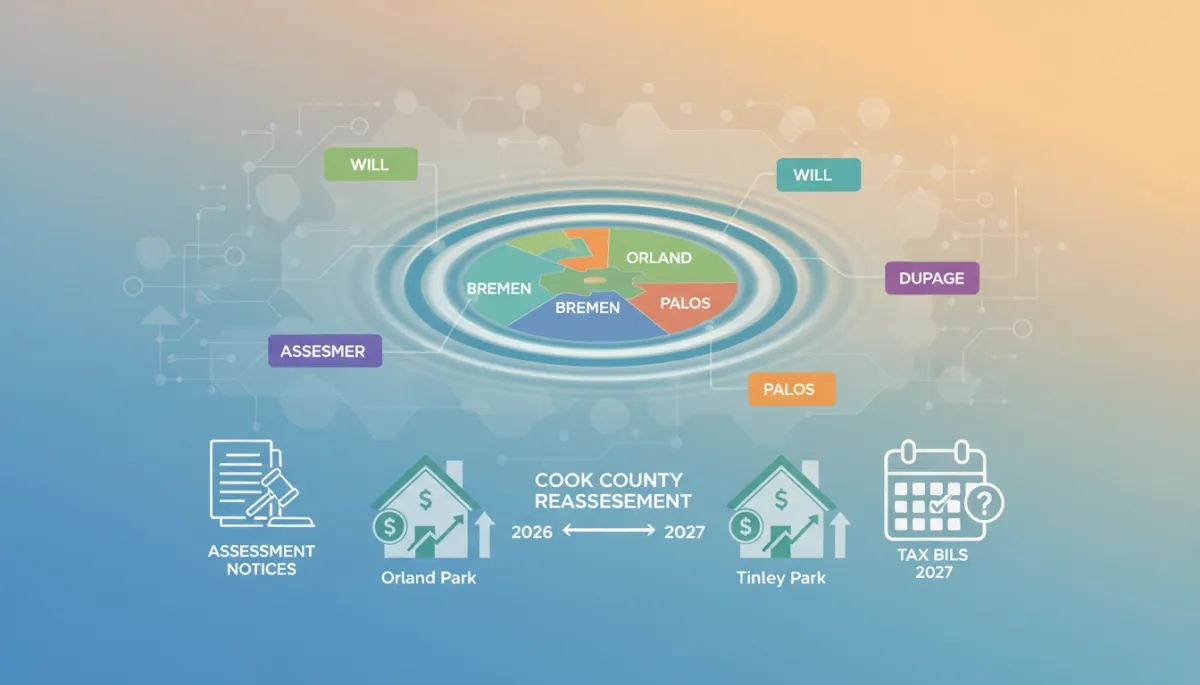
2026 Cook County Reassessment Guide for Buyers & Sellers
Real Estate, Property Taxes, Cook County Reassessment
2026 Cook County Reassessment: What Sellers and Buyers in Orland Park & Tinley Park Need to Know
The 2026 Cook County reassessment is a big deal for anyone planning to sell or buy in Orland Park or Tinley Park. Understanding how new assessed values are set, when notices arrive, and how those numbers feed into your 2027 tax bills can help you time your move and avoid surprises at closing.
Planning Your Move Around the 2026 Reassessment
How new assessed values shape pricing, timing, and tax expectations
1. Timing: When 2026 Reassessment Notices Arrive in Orland & Bremen
Cook County reassesses property on a three‑year (triennial) cycle. In 2026, it is the turn of the south and west suburbs, which includes:
Orland Township – covering most of Orland Park and the Cook County portions of Tinley Park
Bremen Township – covering other parts of Tinley Park and nearby communities
Palos Township – just north of Orland, where many buyers and sellers cross‑shop
The Cook County Assessor’s calendar shows Orland Township’s 2026 “mail date” as TBD, but the Assessor’s Learn About Reassessments guidance indicates that south and west suburban notices generally start going out in late April.1 Expect a similar late‑spring window for Bremen and Palos as their turn comes up during the season.
2. How Assessed Values Turn into Property Taxes
Your reassessment notice shows the Assessor’s estimate of your home’s fair market value. For most Cook County homes, the Assessor applies a standard ratio (typically about 10% of market value) to calculate the assessed value.2 That number is then equalized and multiplied by local tax rates to produce your final bill.
Two key points for Orland Park and Tinley Park owners:
A higher assessed value does not automatically mean a huge tax jump. What matters is how your value changed compared with the rest of your taxing district’s total assessed value.
Appeals by large commercial properties can shift more of the tax burden onto homeowners, even if your own assessment looks reasonable.3
3. When New 2026 Assessed Values Are Really “Known”
You will first see your new proposed value on the Assessor’s Reassessment Notice. That’s your early warning and your first chance to react. But that number can still change:
You can appeal to the Cook County Assessor’s Office during the appeal window printed on the notice (appeals are free; no attorney required).1
After Assessor appeals, you can appeal again to the Cook County Board of Review, which can further adjust values.2
Practically speaking, your “final” 2026 assessed value for Orland, Bremen, or Palos isn’t truly settled until both levels of appeals have closed. That final number is what will feed into your 2027 tax bills.
4. 2027 Tax Bills: How 2026 Reassessment Shows Up on What You Pay
Cook County taxes are always a bit delayed. The 2026 reassessment in Orland, Bremen, and Palos will primarily affect your 2027 second‑installment tax bill (the big bill that arrives the following year).2
For sellers and buyers in Orland Park and Tinley Park, that means:
A sale closing in late 2026 or early 2027 will still be based on pre‑reassessment tax bills, but the parties should anticipate higher (or at least different) bills in 2027 and beyond.
Lenders and attorneys may adjust tax prorations at closing based on the new assessed values and projected rate changes.

Smart buyers and sellers factor future 2027 tax bills into pricing and negotiations.
5. How Cook County’s Township Reassessment Differs from Will & DuPage
In Cook County, reassessment is organized by township within a three‑district cycle (Chicago, north suburbs, south/west suburbs).2 Orland, Bremen, and Palos are all on the 2026 south/west suburban schedule, and notices roll out township by township.
Neighboring counties like Will and DuPage also reassess regularly, but the process is generally:
Less centralized around one county‑wide Assessor’s Office and more driven by local township assessors.
Often on different timing cycles, so a Tinley Park home on the Cook side may be reassessed in 2026, while a nearby Will County home follows a different calendar.
For buyers comparing Orland or Tinley in Cook to homes in Will or DuPage, this means future tax behavior can look very different, even when current bills seem similar.
6. Listing Timing: Should You Sell Before or After the 2026 Reassessment?
There is no one‑size‑fits‑all answer, but there are clear timing considerations for Orland Park and Tinley Park sellers:
Listing before notices arrive (early 2026): Buyers will look at current tax bills, but savvy ones will still ask about the upcoming reassessment. You may face more uncertainty questions but less sticker shock from a new assessment on paper.
Listing after you receive your notice: You can show buyers the new assessed value, explain whether you appealed, and give a more realistic estimate of 2027 taxes. This can build trust and reduce surprises later.
📌 Key Takeaway: For most sellers, it is helpful to know your 2026 assessment and appeal outcome before you hit the market, so you can answer buyers’ tax questions confidently.
7. Considerations for Sellers & Buyers in Orland Park and Tinley Park
For Sellers
Price with future taxes in mind. If your assessed value jumps significantly, buyers may mentally “bake in” a higher 2027 bill and adjust what they are willing to pay.
Have a simple explanation ready for how Cook County taxes work, especially if buyers are coming from Will or DuPage and are unfamiliar with the triennial cycle.
For Buyers
Don’t just look at the last tax bill. Ask whether the property has been reassessed yet in 2026, and review the new notice if available.
When comparing Orland/Tinley in Cook to nearby Will or DuPage homes, factor in different reassessment rhythms and long‑term tax trends, not just this year’s bill.
8. Appealing Your Assessment Before You Sell
Many Orland Park and Tinley Park homeowners choose to appeal their 2026 reassessment before listing. An appeal can:
Potentially lower your assessed value, which can help keep future tax bills more manageable for the next owner.
Give you a stronger story to tell buyers: “We appealed and here is the final number you can expect taxes to be based on.”
Tips for appealing effectively:
Watch your mail closely from late April onward and note the appeal deadline on your notice.1
Gather recent comparable sales in Orland Park or Tinley Park that support your view of market value.
File online through the Assessor’s website, or get help from the Orland Township Assessor’s Office (Rich Kelly’s office) or your real estate professional.
💡 Pro Tip: Start your appeal as soon as the notice arrives. Waiting until you are under contract can compress timelines and add stress for both you and your buyer.
9. How New Assessed Values Influence Negotiations and Tax Planning
By the time you are negotiating an offer in late 2026 or 2027, your final 2026 assessment for Orland, Bremen, or Palos will largely determine your share of the tax base. That influences:
Buyer affordability: Higher expected 2027 taxes can reduce what a buyer can comfortably offer, especially with higher mortgage rates.
Seller concessions: In some cases, sellers may offer closing credits to offset a projected tax jump and keep the deal together.
Understanding where your assessment landed—and being ready to explain it—can make your Orland Park or Tinley Park sale smoother, more transparent, and ultimately more successful for everyone involved.
Sources: Cook County Assessor’s Office – Assessment Calendar & Deadlines; Cook County Property Tax System Overview; south/west suburban reassessment guidance and appeal resources.1,2,3
