WELCOME
55+ and Active Adult Communities in the Chicago Southwest Suburbs and Northwest Indiana
A straightforward guide to age-restricted and age-targeted communities across Will, Kendall, Grundy, DuPage, and Cook counties in Illinois, and Lake, Porter, and La Porte counties in Indiana — what exists, what it costs, and how the move actually works.
55+ Communities
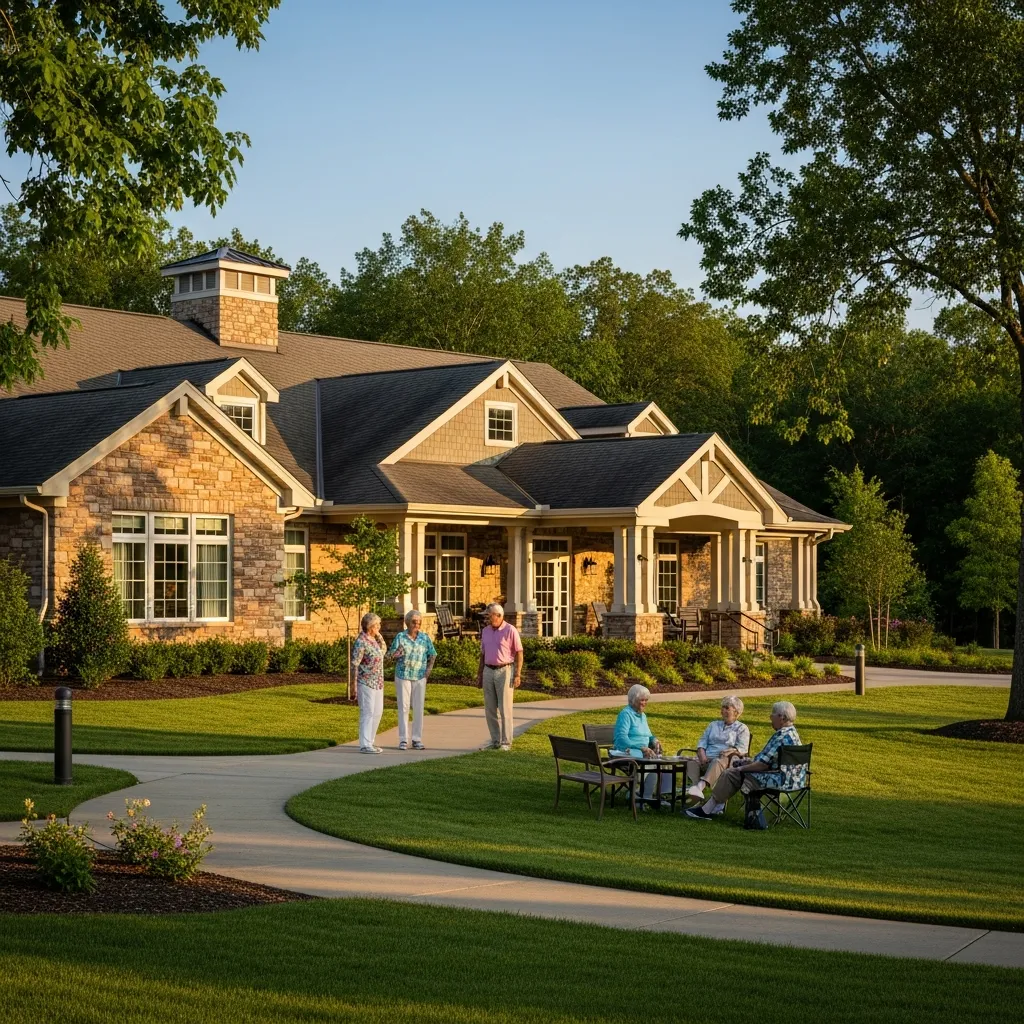
A 55+ community is a residential neighborhood where at least 80% of occupied homes have one resident age 55 or older, a structure permitted under the federal Housing for Older Persons Act. In the Chicago southwest suburbs and Northwest Indiana, these range from gated golf communities of two thousand homes to twelve-unit villa courts. Most offer single-level floor plans, exterior maintenance handled by the association, and a clubhouse. Steve Roake, a licensed broker since 2003, helps homeowners on both sides of that move.
QUICK NAVIGATION
WHAT IS A 55+ COMMUNITY
Age-restricted (55+).** The association enforces an age rule under the Housing for Older Persons Act. At least 80% of occupied units must have one resident 55 or older, and the community has to publish and follow policies that demonstrate the intent to house older adults. The remaining 20% gives associations flexibility for a surviving spouse, an adult child inheriting, or a resale in progress. Every community writes its own rule inside that framework, so read the declaration rather than assuming.
Age-targeted. No enforceable age rule. The homes are simply built for the buyer who wants one level, a smaller yard, and a low-step entry. Anyone can buy. These often carry lower dues and broader resale demand.
Age-qualified rental and care communities. Independent living, assisted living, and memory care are leases and service contracts, not real estate purchases. They are a completely separate decision from the ones on this page, and they are not what a REALTOR® sells.
| Community Type | Features |
|---|---|
| Age-restricted 55+ | Enforceable age rule, deeded ownership, HOA amenities, smaller resale buyer pool |
| Age-targeted | No age rule, deeded ownership, single-level design, broadest resale pool |
| Senior living / care | Lease or contract, not ownership, monthly service fees, no equity |
COMMUNITY DIRECTORY
Availability changes weekly. The list below covers the established communities Steve works in most often. For a current list of what is actually on the market in any one of them, call or text 630-912-9129.
Illinois
Carillon
Plainfield, IL (Will County)
· Age-restricted 55+
· Gated golf community, roughly 2,100 homes
· Club Carillon — 32,000 sq ft clubhouse
· Condos, townhomes, coach homes, single-family
Carillon Club
Naperville/Plainfield, IL
· Age-restricted 55+
· Clubhouse and organized activity programming
· Attached and detached homes
Carillon Lakes
Shorewood, IL ( Will County)
· Age-restricted 55+
· Lake-oriented site plan, clubhouse
Shorewood Glen
Shorewood, IL (Will County)
· Del Webb community
· Clubhouse, single-level floor plans
Grand Haven
Romeoville, IL (Will County)
· Active adult community, clubhouse
Timbers Edge Villas
Joliet,, IL (Will County)
· Villa-style attached homes
Northwest Indiana
Villas at Vale Park
Valparaiso, IN (Porter County)
· Active adult, villa-style
COST BREAKDOWN
What a 55+ Community Actually Costs to Own
The purchase price is the part everyone compares. The monthly carrying cost is the part that decides whether the move works. Two homes at an identical price can differ by four hundred dollars a month once the association dues and what those dues cover are accounted for.
Ask for these seven numbers on every community before you get attached to a floor plan:
| Fee / Expense Category | Estimated Cost |
|---|---|
| Monthly HOA/Assessment | The current figure, and the figure from three years ago |
| What Dues Include? | Lawn care, snow removal, exterior paint, roofs, water, trash, cable |
| What do Dues Exclude? | Windows, decks, driveways, HVAC, interior anything |
| Reserve Study | When it was last done, and the current funding percentage |
| Recent or pending special assessments | Amount, purpose, and payment schedule |
| Rental Cap | The percentage of units permitted as rentals, and whether the cap is currently met |
| Taxes & Senior Exemptions | Illinois and Indiana treat homestead and senior exemptions differently — confirm what transfers |
A well-funded reserve and dues that have risen modestly over ten years is a healthier sign than low dues today. Underfunded reserves become special assessments, and special assessments arrive without much warning.
THE SELLER SIDE
The Part Most People Underestimate: Selling the House You're In
For most homeowners making this move, the current home is the largest asset in the decision. It is also frequently a home owned for twenty or thirty years, filled with decades of belongings, and carrying a fair amount of feeling. Both of those things are true at once, and neither one should be rushed.
A real number, not a guess
A comparative market analysis built on a 1-mile radius, ±20% square footage, ±1 bedroom and bathroom, and similar age, garage, and basement. Every comp gets adjusted rather than averaged.
Sequencing
Whether to sell first, buy first, or use a bridge. The answer depends on the community, your equity position, and current inventory — it is a different answer for a Carillon resale than for new construction.
Pre-List Scope
Which repairs and updates return more than they cost at your price point, and which ones to leave alone. Homes at this stage often need less than the owner assumes.
The contents problem.
Estate sale contacts, donation pickup, and downsizing help, so the house is empty on schedule without anyone doing it alone.
What The Marketing Has to Earn

Our listings have closed at a 101% average list-to-sale price ratio, compared to the 97.7% MLS average.
n a $475,000 home, that gap is roughly $15,600.
615+ transactions closed · $113M+ in sales volume · Licensed since 2003
TIMELINE
Understanding the process makes the transition easier. Here are the key steps involved in a successful move to a 55+ community.
Step 1 — Get the two numbers (Week 1)
What your current home is worth today, and what the community you are considering actually costs to own. Both, side by side, before any decision.
Step 2 — Tour communities (Weeks 2–6)
Visit at different times of day and on a weekend. Talk to residents. Request the declaration, budget, and reserve study.
Step 3 — Choose the sequence (Week 6)
Sell first, buy first, or bridge. This decision drives everything after it.
Step 4 — Prepare and list (Weeks 6–12)
Repairs, contents, photography, launch. The contents work starts early, because it always takes longer than expected.
Step 5 — Close and settle (Weeks 12–20)
Coordinated closings, movers, and utility transfers. Steve keeps both transactions on the same calendar.
Some people run this in eight weeks. Some take two years. Both are fine.
NO SURPRISES
FREQUENTLY ASKED QUESTIONS
What is the difference between a 55+ community and a senior living facility?
A 55+ community is real estate you own, with an association and an age policy. A senior living facility is a lease with services attached — independent living, assisted living, or memory care. One builds equity, the other does not. This page covers the first.
Can someone under 55 live in a 55+ community?
Frequently, yes. The Housing for Older Persons Act requires that at least 80% of occupied units have one resident 55 or older. That leaves room in the remaining 20%, and many associations permit a younger spouse. Each community sets its own rule inside that framework, so confirm it in writing before you buy.
Are 55+ homes harder to resell?
The buyer pool is narrower, which can lengthen market time compared to a comparable non-restricted home. Well-run communities with strong amenities and healthy reserves resell steadily. Communities with deferred maintenance and repeated special assessments are where sellers struggle.
What are HOA dues in Chicago-area 55+ communities?
Dues vary widely by community and by whether the home is attached or detached. Rather than quoting a range that would be out of date within months, ask for the current figure and the figure from three years ago. The trend line tells you more than the number.
Can family members or grandchildren visit and stay overnight?
Of course. Grandchildren and family members are always welcome to visit and use the community amenities when accompanied by you. We simply limit overnight stays to a maximum of 30 days per year to maintain our active adult focus.
Are the homes designed with accessibility in mind?
Every home is thoughtfully constructed with single-level living in mind. Standard features include zero-step entries, wider doorways, walk-in showers with seating, and open floor plans to accommodate any future mobility needs.
What kind of security and emergency services are provided?
Your peace of mind is our priority. The community features a gated entrance with 24/7 security personnel. Additionally, all homes are equipped with modern emergency response systems directly linked to local first responders.
Do you offer financing options or assistance with selling my current home?
While we don't provide direct financing, we partner with trusted local lenders who specialize in senior living transitions. We also have a network of preferred real estate agents who can help list and sell your current property smoothly.
Should I sell my current home before I buy?
It depends on your equity position, the inventory in your target community, and your tolerance for moving twice. In tight-inventory communities, buying first protects the home you want. Where inventory is steady, selling first is usually cleaner and stronger at the negotiating table.
Do I lose my senior property tax exemptions if I move?
Exemptions do not automatically follow you. Illinois and Indiana handle homestead and senior exemptions differently, and moving across the state line changes the picture. Confirm with the county assessor before you commit, and factor the difference into the monthly cost comparison.
What should I look at in the association documents?
The reserve study and its funding percentage, three years of budgets, any special assessment history, the rental cap, pet and vehicle rules, and the guest and occupancy policy. Read the reserve study first — it predicts your future expenses better than anything else in the packet.
What areas does Constellation Home Sales | Freedom Group Global serve?
Will, Kendall, Grundy, DuPage, and Cook counties in Illinois, and Lake, Porter, and La Porte counties in Indiana. Steve is licensed in both states and holds the ABR® and SFR® designations. We have strong relationships with agents around the country if you need help elsewhere.
Get Your Free 55+
Move Analysis
Two numbers, side by side: what your current home would realistically sell for today, and what it would cost you to own in the community you are considering. No obligation, no pressure, and no follow-up you did not ask for.
- Zero-pressure, expert local guidance
- Curated community recommendations
- Clear timeline & hidden cost breakdown

About Constellation Home Sales | Freedom Group Global
Constellation Home Sales | Freedom Group Global is a Orland Park-based real estate team serving the Chicago South and West suburbs and Northwest Indiana. Led by Steve Roake and Kimberly Genovese, the team is built on a simple belief: a home is one of the most important financial decisions a family will ever make, and it deserves more than a transactional approach.
Where most real estate professionals stop at the sale, Freedom Group Global starts with the bigger question — how does this home decision support the family's future? That perspective shapes everything, from how the team prices and markets a listing to how it guides a first-time buyer through their options.
The team serves families at every life stage. For buyers, that means young families, first-time buyers, and move-up households building toward stability and long-term wealth. For sellers, it means expert pricing, marketing, and negotiation. And for families facing life's harder moments — settling an inherited or probate property, or selling a home through a divorce — it means a patient, discreet guide who handles both the numbers and the weight of the moment with care.
With more than 45 years of combined experience and over 615 families served, Freedom Group Global brings strategy, heart, and results to every relationship. The team's commitment doesn't end at closing — clients gain a long-term resource for market insight, home decisions, and the next chapter, whenever it comes.
Creating new possibilities, one family at a time.
45+
YEARS OF COMBINED EXPERIENCE
615+
FAMILIES HELPED
113M+
IN SALES VOLUME

© Copyright 2026. Constellation Home Sales | Freedom Group Global. All rights reserved.
Social



Services
Contact Us
Open Hours:
Hours of Operation: 8am - 8pm CST
Phone Number: 630-912-9129
Email address: [email protected]
Keller Williams Preferred Realty
Address:
16101 S 108th Ave, Orland Park IL 60467