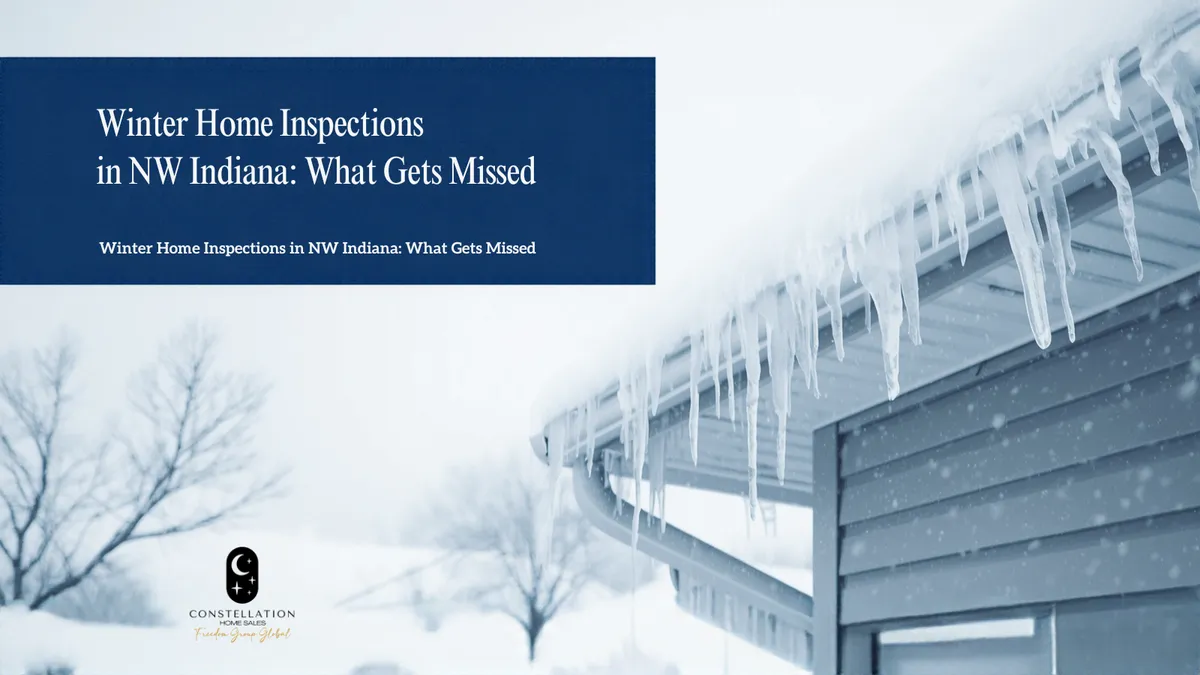
Winter Home Inspections in NW Indiana: What Gets Missed
Can a winter home inspection in Northwest Indiana catch everything a summer one would?
No. A winter inspection in Lake, Porter, or La Porte County still tells you a lot, especially about heat, insulation, and moisture. However, snow can hide the roof and the ground around the foundation, and most inspectors won't run the air conditioner in cold weather. Plan for those gaps in your contract before your inspection window closes.
By the Constellation Home Sales Team | November 5, 2026
If you're under contract on a home in Crown Point, Valparaiso, Portage, or Merrillville right now, you're probably watching the calendar more closely than the weather. Your inspection period is short, the forecast says snow, and you're wondering whether the inspector can actually see what you're paying for.
This is one of the most common questions buyers raise once November hits. It matters for sellers too, because a thin winter report is where deals get renegotiated late.
Here's how to handle it from either side of the table.
What a winter inspection still does well
Cold weather isn't the enemy of a good inspection. In several ways it helps.
Heating system performance. Your furnace or boiler works hardest in the cold, so the inspector sees it under real load, not a lukewarm test.
Insulation and air leaks. Drafts around windows, doors, and attic hatches show up quickly, and so do ice dams and icicle patterns that point to heat loss at the roofline.
Moisture and ventilation. Condensation on windows, damp attic sheathing, and bathroom fans that vent into the attic are easier to spot when the house is closed up tight.
Radon. Winter is generally considered a reliable season for radon testing because homes stay closed and the stack effect pulls more soil gas indoors. Ask your inspector about a short-term test during the inspection period.
Because Indiana licenses home inspectors, you can also ask any inspector you're considering to confirm their license and walk you through what their report will and won't cover. Do that before you book, not after.
What snow, ice, and frozen ground can hide
This is where buyers get surprised. A standard inspection is visual and non-invasive, so anything covered by snow is a limitation the inspector will write into the report.
The roof. If the roof is covered, the inspector may not be able to evaluate shingles, flashing, or chimney crowns. They'll note it as "not inspected." You may need to ask for a follow-up look once the snow clears or negotiate a roof credit or escrow holdback.
Grading and drainage. Frozen ground and snow cover make it hard to judge whether water slopes away from the foundation. Gutters full of ice can hide leaks and downspout problems too.
Air conditioning. Most inspectors won't run central air when outdoor temperatures are low, because it can damage the equipment. You'll get a visual check of the unit and not a performance test.
Exterior surfaces. Patios, driveways, walkways, decks, and even the foundation base can sit under snow or ice.
Sewer line and septic. Neither is part of a standard inspection. A camera scope of the main sewer line works in winter and is worth considering on older homes in Hammond, Highland, Munster, and Michigan City. For homes on septic or well, see our guide on septic and well homes in Northwest Indiana before you finalize your inspection list.
How to protect yourself as a buyer
You can't control the weather, so control the paperwork and the timeline.
Read the inspection contingency dates today. Indiana isn't an attorney-review state, so there's no five-day cooling-off window layered on top of your purchase agreement. Your inspection deadline is whatever your signed contract says, so confirm the exact dates with your agent and your title company.
Book specialty inspections early. Sewer scope, radon, and a chimney inspection all add days. Schedule them in the first 48 hours so the results land before your deadline.
Ask for the seller's documentation. Roof age, furnace service records, and receipts for past water repairs help fill the gaps winter creates.
Review the Seller's Residential Real Estate Sales Disclosure carefully. This is the property-condition statement sellers deliver under Indiana law, and it's a different document from the Sales Disclosure Form, State Form 46021, which is a tax filing handled at closing. Our post on the Indiana seller disclosure versus Form 46021 breaks down the difference.
Negotiate with the limitation in writing. If the report says the roof or the cooling system couldn't be evaluated, put a specific remedy in your repair request: a re-inspection after thaw, a credit, or a seller-paid roof certification where one is available. Our seller playbook for inspection repair requests in Northwest Indiana shows how those requests tend to be answered from the other side.
If the inspection turns up something big and your lender's appraisal follows, the two can collide. Our guide to what to do when an appraisal comes in low in Northwest Indiana covers your options.
What sellers should do before the inspector arrives
Sellers have more control here than they think, and a little prep keeps a winter inspection from turning into a renegotiation.
Clear access. Shovel walkways, salt the steps, and clear a path to the furnace, water heater, electrical panel, attic hatch, and crawl space.
Make the roof and exterior visible when you can. If a dry, clear day arrives before the inspection, knock snow off low-pitch sections and clear gutters and downspouts safely, or hire someone who can.
Gather your records. Roof installation date, HVAC service history, and permits for any past work answer questions before they become repair requests.
Fix the small stuff. Burned-out bulbs, loose handrails, and dripping faucets create a bad first impression in a report, and they cost almost nothing to repair.
Keep your Seller's Residential Real Estate Sales Disclosure current. If something changed since you filled it out, update it. A disclosure that matches the inspection report builds trust, and one that doesn't gives the buyer leverage.
Review our winter home prep checklist for a fuller list of cold-weather steps.
Selling and buying at the same time adds another layer. If that's you, read our guide to buying before you sell in Northwest Indiana so your inspection deadline on one home doesn't collide with your closing on the other.
A winter inspection isn't a worse inspection. It's a different one, with different blind spots. The buyers who come out ahead are the ones who know the blind spots by name, put follow-up remedies in writing, and use every day of the inspection period. The sellers who come out ahead are the ones who make the house easy to inspect and have the records ready.
Every contract has its own dates and its own contingencies, so confirm the exact timeline with your title company and your agent. For anything tied to taxes or lending, check with a tax professional or your lender.
Frequently Asked Questions
Can I ask for a second inspection when the snow melts?
You can ask, and many buyers do. Whether the seller agrees depends on your contract dates and the negotiation, so request it in writing during your inspection period, not after it expires. A credit or escrow holdback for the uninspected item is another common solution.
Will an inspector test the air conditioning in winter?
Usually not. Running central air in cold weather can damage the compressor, so most inspectors do a visual check only and note that the system wasn't operated. Ask for a seller's service record, and consider a dedicated HVAC technician visit once temperatures rise.
Is radon testing worth it in a Northwest Indiana winter?
It's often a smart time to test because homes are closed up and conditions are favorable for a representative reading. A short-term test fits inside most inspection periods. If the number comes back elevated, a mitigation system is a typical repair request.
Does Indiana give me an attorney review period after I sign?
No. Indiana isn't an attorney-closing state, and there's no Illinois-style attorney review window. Closings are usually handled by a title company or escrow agent, so confirm your contingency dates with your title company.
Who pays for the inspection in a Lake County sale?
Buyers typically pay for their own inspection, including specialty add-ons like radon or a sewer scope. Sellers sometimes order a pre-listing inspection to find problems early. Either way, the cost is a small piece of the deal compared with an unexpected roof or foundation repair.
You now know which parts of a winter inspection to trust and which parts to pin down in writing. If you're under contract, or about to list, and want a second set of eyes on your inspection timeline and repair request, text or call 630-912-9129 and tell me your address and contract date. I'll walk through what your report needs to cover before your deadline hits.


