The 15-Minute Winter Home Prep Checklist for Chicago Suburbs and Northwest Indiana Homeowners
The costliest winter repairs we see as REALTORS® in the Chicago suburbs and Northwest Indiana aren't caused by bad luck. They come from small things nobody checked in October: a hose left on the spigot, a sump pump that hasn't run since spring, a furnace filter that's been in since last winter.
This checklist walks through the quick wins first, then the bigger items worth scheduling before the ground freezes. Most of it takes 15 minutes or less.
Protect your pipes
Frozen pipes are the classic Midwest winter disaster. When water freezes, it expands, and a split pipe can release gallons of water before anyone notices.
Disconnect garden hoses from every outdoor spigot. A hose holds water that freezes back into the line.
Close the interior shutoff valve for each outdoor faucet, then open the outside tap to drain it. Leave it open for the winter.
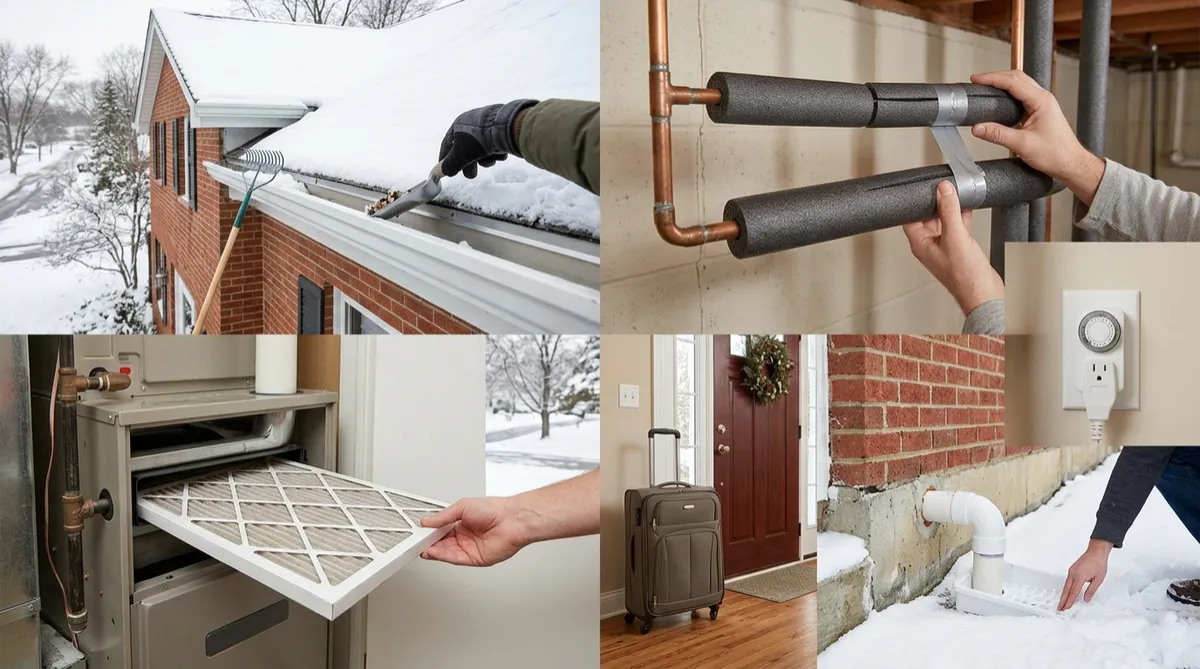
Insulate exposed pipes in crawl spaces, garages and unfinished basements with inexpensive foam sleeves.
Know where your main water shutoff is. If a pipe bursts, finding it in 30 seconds instead of 10 minutes makes a huge difference.
Keep the heat at 55°F or higher whenever you're away, and open cabinet doors under sinks on exterior walls during deep cold snaps.
Get your heating system ready
Replace the furnace filter. A clogged filter makes the system work harder and can shorten its life.
Schedule a professional tune-up. HVAC companies book up quickly after the first cold snap, so call now.
Clear the area around the furnace and water heater. Keep storage boxes and flammables at least a few feet away.
Reverse ceiling fans to run clockwise on low, pushing warm air down from the ceiling.
Have the chimney inspected and swept before your first fire if you have a wood-burning fireplace.
Test your safety alarms
Test every smoke and carbon monoxide alarm and replace batteries. Illinois law requires CO alarms within 15 feet of every sleeping room.
Check alarm expiration dates printed on the back. Most need full replacement every 7 to 10 years.
Keep a fire extinguisher in the kitchen and confirm the gauge reads in the green.
Keep water out, from the roof to the basement
Clean gutters and downspouts after the leaves drop, and extend downspouts at least 4 to 6 feet from the foundation.
Test your sump pump by pouring a bucket of water into the pit and confirming it kicks on. Check the battery backup too; the spring thaw is when it matters most.
Look for ice dam risk. Icicles along the roof edge often mean warm air is escaping into the attic. Adding attic insulation and sealing air leaks around light fixtures and the attic hatch helps prevent them.
Walk the roof line from the ground and look for missing or lifted shingles before snow covers them.
Seal the drafts
Weatherstrip doors and windows where you feel air moving or see daylight.
Caulk gaps around window frames, door trim and where pipes or wires enter the house.
Add door sweeps to exterior doors, including the door from the garage.
A sealed house holds heat better and keeps your heating bills in check.
Be ready for snow and outages
Service the snowblower now: fresh fuel or stabilizer, a spark plug check, and a test start.
Stock ice melt, a good shovel and a roof rake before the first storm empties the store shelves.
Build a simple outage kit: flashlights, batteries, water, blankets, phone chargers and any medications.
If you have a generator, test it and never run it in the garage or near windows.
Heading out of town for the holidays?
Set the thermostat no lower than 55°F.
Ask a neighbor to check the house every few days and clear any packages.
Consider shutting off the main water supply and draining the lines if you'll be gone more than a week.
A smart leak sensor near the water heater and washing machine can alert your phone before a small leak becomes a big one.
Why this matters for your home's value
A well-maintained home is easier to insure, cheaper to own and worth more when you sell. Buyers and home inspectors notice deferred maintenance immediately, and water damage shows up on disclosures for years. If you're thinking about selling in the spring, winter is the perfect time to handle small repairs on your own schedule instead of during a rushed pre-listing scramble. Here's how we prepare homes for market.
Frequently asked questions
When should I winterize my home in the Chicago area? Aim for mid-October through mid-November, before the first sustained hard freeze. Outdoor spigots and hoses are the most time-sensitive items.
What temperature should I keep my house at when I'm away in winter? Keep the thermostat at 55°F or higher. Lower settings raise the risk of frozen pipes, especially on exterior walls.
How do I know if my sump pump works? Pour a bucket of water into the pit. The pump should start, empty the pit and shut off on its own. If it has a battery backup, test that separately by unplugging the main pump.
What causes ice dams? Heat escaping into the attic melts snow on the roof. The water refreezes at the colder roof edge and backs up under the shingles. Better attic insulation and air sealing are the long-term fixes.
Questions about your home? We're here to help
We're Steve Roake & Kimberly Genovese with Constellation Home Sales | Freedom Group Global at Keller Williams Preferred Realty, serving the Chicago southwest suburbs and Northwest Indiana. Whether you want a trusted contractor referral or a no-obligation estimate of your home's value, we're glad to help.
Book a 15-minute call or call 630-912-9129.
