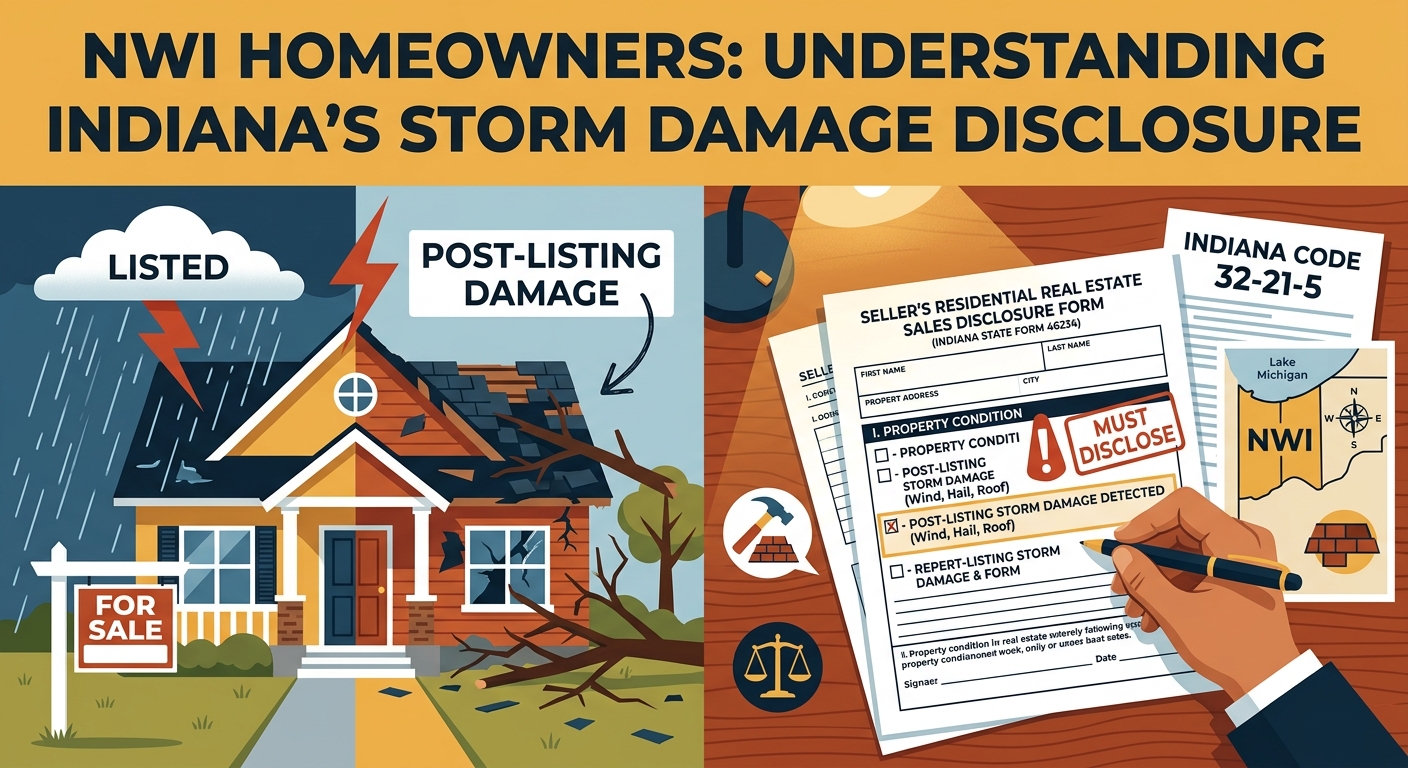
Do You Have to Disclose Storm Damage When Selling a Home in Northwest Indiana?
Do You Have to Disclose Storm Damage When Selling a Home in Northwest Indiana?
Yes. Indiana's Seller's Residential Real Estate Sales Disclosure requires you to report known material defects, including roof, structural, or water damage, based on what you actually know. If a storm damages your home after you have already handed a buyer that disclosure form, you are required to update them before closing. Selling "as-is" does not remove this requirement. What changes is how you time the sale, the insurance claim, and the repairs around it.
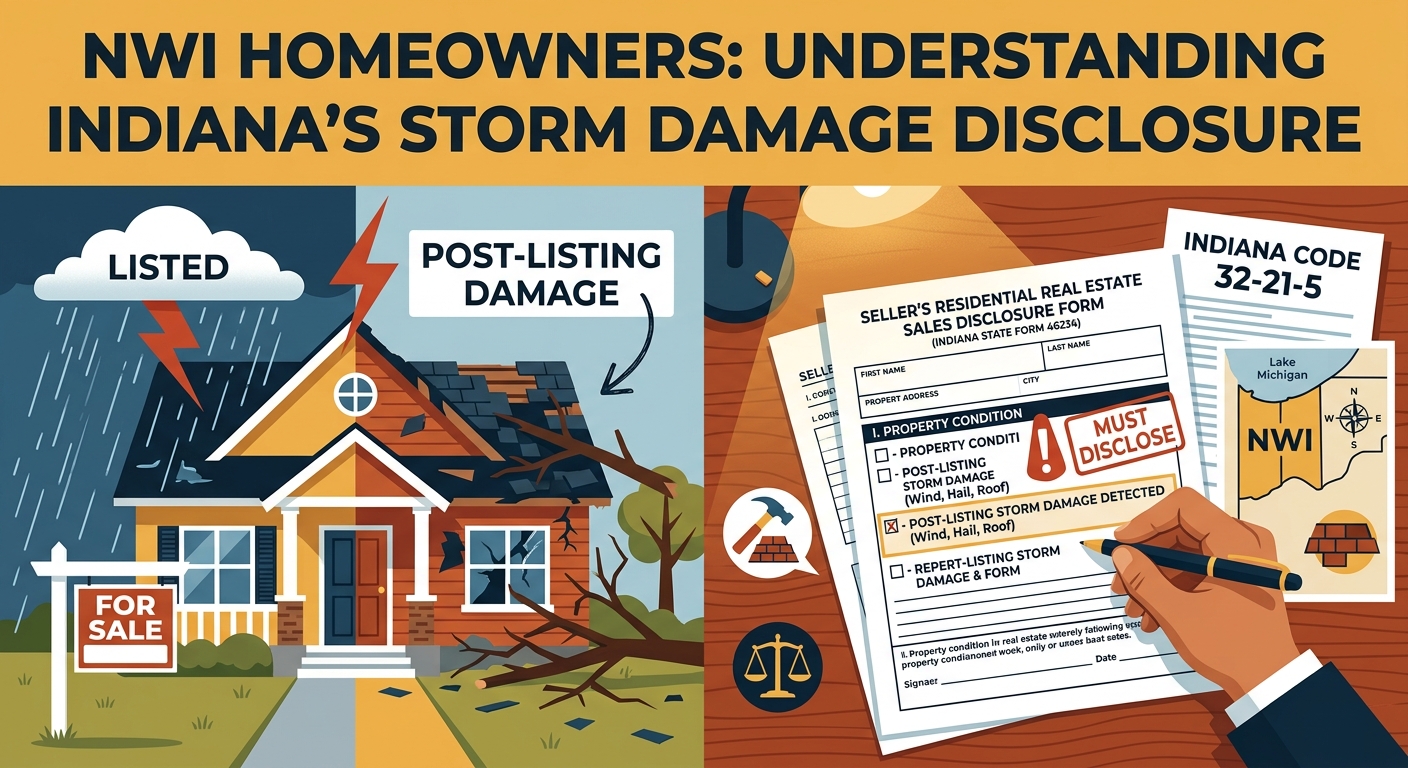
By the Constellation Home Sales Team | August 15, 2026
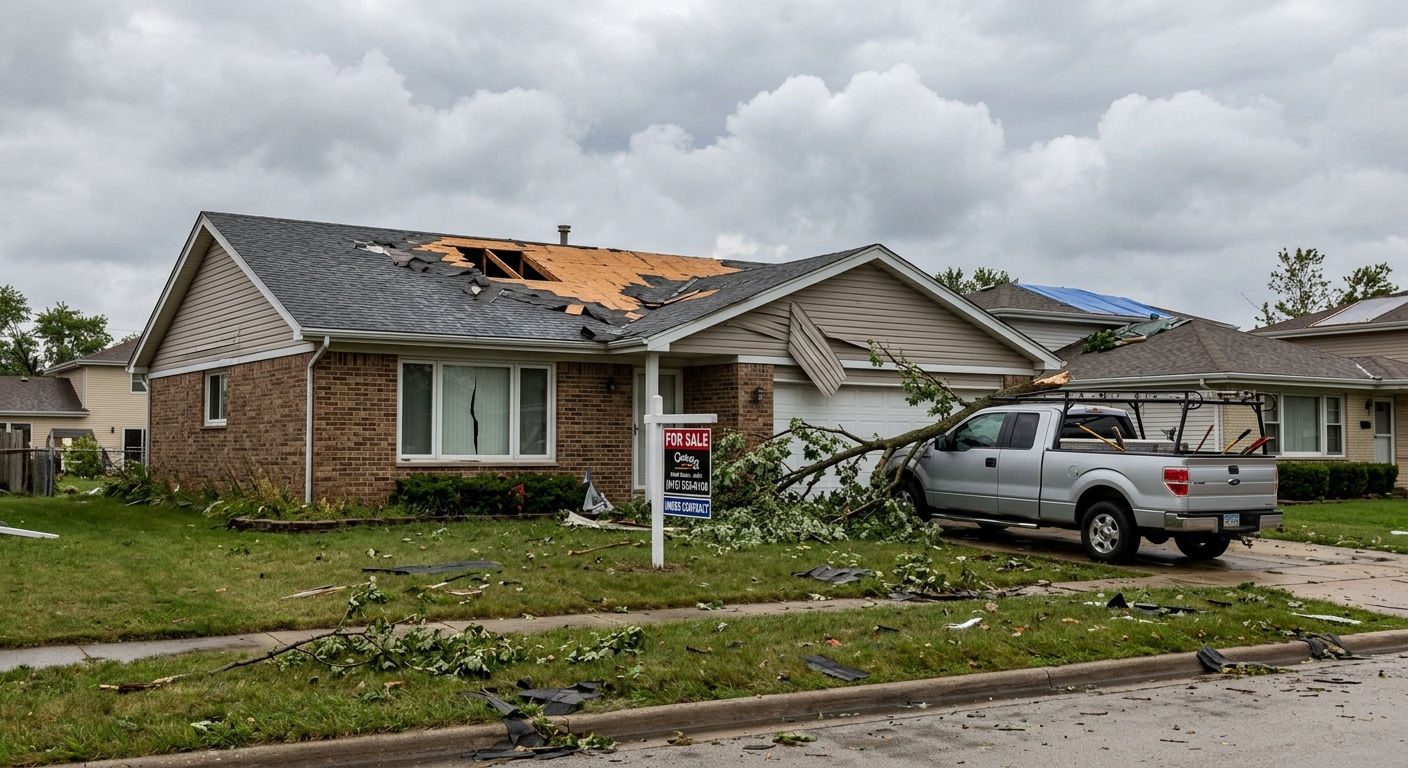
The August 11 derecho that swept through Northwest Indiana left a real mark. The National Weather Service confirmed an EF-1 tornado through Munster and an EF-2 through St. John into western Crown Point, with straight-line winds topping 90 miles per hour recorded region-wide and a peak gust of 99 miles per hour at Gary/Chicago International Airport. Hundreds of thousands of utility customers across Lake and Porter counties lost power, and homeowners from Hammond to Portage are still assessing roofs, siding, garages, and fences.
If your home took damage and you were already thinking about selling, or you are wondering whether this changes your plans, here is what actually matters for the transaction.
What Indiana Law Requires You to Disclose After a Storm
Indiana's disclosure standard is based on actual knowledge, not a home inspection you are required to commission. That said, once you know about damage, you cannot leave it off the form. Specifically:
The Seller's Residential Real Estate Sales Disclosure covers known issues with the roof, foundation, walls, ceilings, and water intrusion, whether or not the damage is obvious to a buyer walking through.
If the disclosure form was already delivered to a buyer and the home's condition materially changes afterward, such as storm damage to the roof, you must update the buyer before settlement or confirm in writing that the condition has not changed.
Selling as-is means you are not obligated to repair anything before closing. It does not waive your obligation to disclose what you know.
Skipping this step is not a shortcut. An undisclosed defect discovered after closing is one of the more common triggers for a real estate lawsuit in Indiana, and it can unwind a deal you thought was finished.
Repair Before You List, or Sell As-Is?
This is the real decision point for most storm-affected sellers right now, and there is no single right answer. It depends on your timeline, your insurance settlement, and how the damage compares to what buyers are already touring in Crown Point, St. John, and Munster.
A few things worth thinking through before you decide:
Get your insurance claim started and documented now. Photograph the damage, get a written estimate, and open the claim even if you have not decided whether to sell. Buyers and their lenders will want to see this paperwork later regardless of which path you choose.
Understand that financed buyers come with lender conditions. A buyer using a mortgage will likely have a lender that requires certain repairs, particularly roof and structural issues, before closing. If you plan to sell without repairing first, you are narrowing your buyer pool to cash offers or buyers comfortable financing a home that needs work.
Get an appraisal-minded read on the damage. A property with visible, unrepaired storm damage will appraise differently than the same home in pre-storm condition. Knowing that number before you set a list price saves you from a surprise during underwriting.
Weigh the calendar. Contractors across Northwest Indiana are booked out further than usual right now given the scale of this event. If you are hoping to sell this fall, a full roof replacement might not happen on your timeline, which makes an as-is sale, priced accordingly, a legitimate option worth pricing out rather than assuming it is a last resort.
If your home was in a subdivision like Crown Point's Prairie Point development or near the Fountains project, buyer interest in that area has already been strong this year for reasons unrelated to the storm. That demand does not disappear because of roof damage. It does mean pricing and disclosure need to be handled correctly so it does not become a problem at the closing table.
What This Means If You're Buying in Munster, St. John, or Crown Point Right Now
If you are house hunting in the areas hit hardest by the derecho, storm damage is now something to actively check for, not assume away. Ask directly whether a seller has filed an insurance claim, request the disclosure form before you write an offer, and budget time for your lender to review any repair conditions tied to the appraisal. None of this should scare you off a home you like. It should shape how you negotiate.
This is also where having someone who negotiates for a living matters. A home with documented, insured, properly repaired storm damage is not the same risk as one where the seller is hoping nobody asks. Our team's approach to protecting your equity applies just as much to buyers writing an offer on a storm-affected home as it does to sellers pricing one, and it is worth understanding before you get into a multiple-offer situation on a home that needs a closer look.
For a broader read on where Lake, Porter, and La Porte county inventory and pricing stand heading into fall, our current housing market breakdown is a useful starting point before you set expectations either way.
Whether you are trying to figure out what your storm-affected home is actually worth or you are shopping in Munster, St. John, or Crown Point and want a second set of eyes on a listing before you commit, this is exactly the kind of situation where a quick conversation saves you from a costly guess. Text or call 630-912-9129 and tell us the address. We will tell you straight whether repairing first or selling as-is gets you further, and what it actually means for your timeline.
Frequently Asked Questions
Do I still have to disclose storm damage if I already repaired it?
Yes, if you know about it. Indiana's disclosure form asks about known past damage and repairs, not just current visible defects. Document the repair with contractor invoices and any permits pulled, since that documentation reassures buyers and their lenders more than the disclosure form alone.
Will storm damage lower my appraised value in Northwest Indiana?
It can, particularly if the damage is unrepaired at the time of appraisal. An appraiser accounts for the home's current condition, not what it will look like after future repairs, so an unrepaired roof or structural issue typically shows up as a value reduction until the work is done or you sell to a cash buyer who is not relying on an appraisal.
Can I sell my house before my insurance claim is settled?
You can, though it complicates the sale. Buyers and title companies will want clarity on whether the claim proceeds transfer with the sale, get assigned to the buyer, or stay with you to fund repairs before closing. Getting your insurer's timeline in writing before you list gives your agent something concrete to work with when structuring the offer.
What if a buyer already has my disclosure form and then a storm hits?
You are required to update them before settlement. In practice, this usually means providing an addendum describing the new damage and confirming that repairs are underway, the insurance claim is filed, or the price is being adjusted to reflect the as-is condition.
Should I make repairs before listing, or let the buyer negotiate a credit?
Both are legitimate strategies, and the right one depends on how competitive your price point is compared to other Crown Point, St. John, or Munster listings right now. A properly disclosed, priced-to-reflect-it as-is sale often moves just as fast as a fully repaired one, provided the price and paperwork line up honestly from the start.
About the Constellation Home Sales Team The Constellation Home Sales Team — Steve Roake and Kimberly Genovese — has closed more than 615 transactions worth over $113 million across Chicago's southwest suburbs and Northwest Indiana. Licensed since 2003 and operating under Keller Williams Preferred Realty, the team specializes in probate and estate sales, expired listings, negotiation, and divorce and life-transition sales, with a track record of selling homes at 101% of list price against a 97.7% MLS-wide average. Connect with the team at freedomgroupglobal.com or 630-912-9129.
