Will the Yorkville Data Center Affect Your Home's Value?
Will the Project Cardinal Data Center Affect Home Values Near Yorkville?
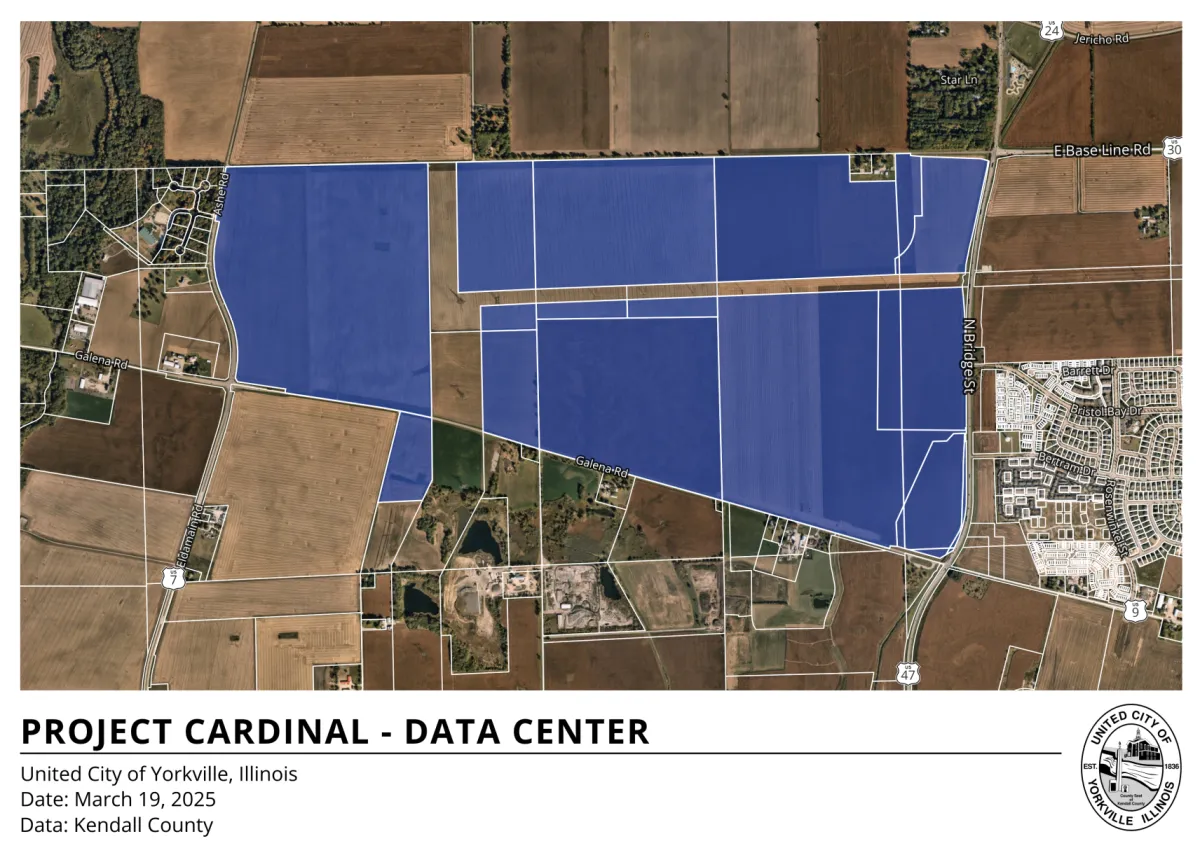
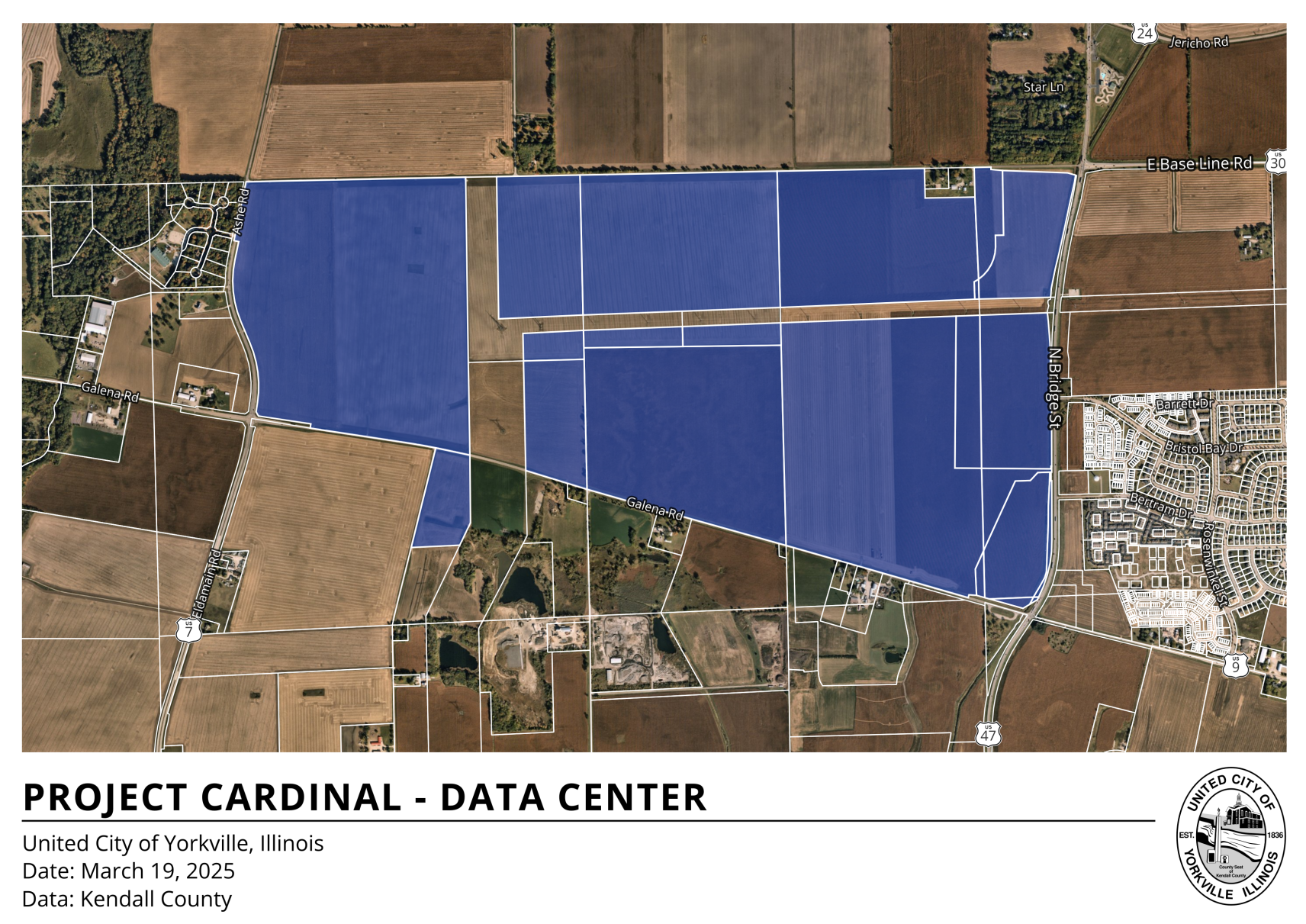
It depends almost entirely on distance. Research on homes near data centers shows properties immediately adjacent, generally within a quarter mile, tend to see a valuation discount tied to noise, truck traffic, and industrial adjacency, while homes farther out often see values hold steady or even rise due to the infrastructure and tax base a project like this brings. Project Cardinal, the 1,037-acre, 14-building data center campus approved for Yorkville near Route 47 and Galena Road, is still working through two separate resident lawsuits and a pending zoning amendment, so the practical effect on any specific property depends on exactly where it sits relative to the site and how the legal questions resolve.
By the Constellation Home Sales Team | August 17, 2026
If you own a home anywhere near the Route 47 and Galena Road corridor in Yorkville, you have probably already heard about Project Cardinal, and you have probably heard three different opinions about what it means for your property. Here is what has actually happened, what the research says, and what it means if you are deciding whether to sell now or wait.
What's Actually Been Approved, and What's Still in Court
The Yorkville City Council approved Project Cardinal on March 11, 2026, after a nearly six-hour meeting that ran past midnight. The approval covers annexation, rezoning, and utility agreements for a 1,037-acre campus spanning 14 data center buildings and more than 17 million square feet, developed by Pioneer Development.
Approval was not the end of the story:
In April 2026, a group of residents filed a lawsuit alleging the rezoning process skipped required environmental studies and proper public notice.
Attorneys made real progress toward a settlement through the spring, with both sides describing the draft agreement as close to finished by March.
A second, separate lawsuit from a group called Preserve Our Yorkville and Community LLC arrived in May 2026, delaying the settlement further.
As of this summer, the developer has also asked the city for an 18-month extension, to December 2027, to finalize the land purchase, citing unforeseen circumstances.
A major amendment to the project's planned unit development was headed to the Plan and Zoning Commission and back to the City Council in July.
None of that means the project is stalled indefinitely. It does mean the exact footprint, timeline, and final terms are still moving, which matters if you are trying to price a home near the site right now.
What the Research Says About Living Near a Data Center
This is not a simple story of falling values or rising ones. The most cited research, a 2025 study out of George Mason University, found that homes closest to existing data centers actually sold for more than comparable homes farther away, largely because data centers tend to land in areas that already have strong infrastructure, good road access, and a healthy job base. That effect shows up at a market level, over time, once a project is built and operating normally.
The distance-specific picture is different closer in. Homes within roughly a quarter mile of an operating data center more commonly see a valuation discount, driven by cooling-system noise, backup generator sound, construction and delivery traffic, and the visual impact of large industrial buildings. Buyers touring homes that close tend to notice and to negotiate accordingly.
For a project like Project Cardinal that has not finished construction and is still tied up in litigation, appraisers and buyers alike are working with more uncertainty than usual, which is its own factor separate from the eventual physical impact.
What This Means If You're Selling or Buying Near Yorkville Right Now
If your home sits close to the Route 47 corridor, a few things are worth doing before you list or make an offer:
Get a specific read on your distance from the approved footprint, not just the general neighborhood. A quarter mile makes a real difference in how buyers and appraisers treat the property.
Expect buyer questions, and have answers ready. Illinois's attorney review period gives buyers room to raise concerns after signing, so walking in with a clear, honest answer about the project's status heads off a renegotiation later rather than inviting one. Our approach to protecting your equity during exactly this kind of negotiation is what keeps a legitimate buyer concern from turning into an unnecessary price cut.
Do not assume the litigation kills your timeline. Homes have continued selling in the surrounding area throughout the settlement talks. The uncertainty affects pricing conversations more than it affects whether a sale can happen.
If you are buying, ask your agent to pull the exact parcel boundaries of the approved project rather than relying on a general sense of where it is. This is easy information to get and it changes the conversation.
This kind of large, contested development is similar in shape to what we saw play out with D.R. Horton's Parksmith Run proposal in nearby Oswego, where the real story for homeowners was less about the headline and more about the specific timeline and footprint. It is a different scale of project entirely, though the lesson holds: the general narrative around a big development rarely matches what any one specific property actually experiences.
Pricing a home correctly next to an unresolved, high-profile development is exactly the kind of situation where our marketing and pricing approach earns its keep, since a generic listing strategy tends to either scare off buyers unnecessarily or leave money on the table by underselling a home that is farther from the site than people assume.
If you are trying to figure out exactly how close your home is to the approved Project Cardinal footprint, or you are house hunting near Yorkville and want a straight answer before you write an offer, that is worth five minutes on the phone rather than a guess. Text or call 630-912-9129 with your address, and we will tell you exactly where you stand.

Frequently Asked Questions
Has Project Cardinal actually been approved, or is it still just proposed?
It has been approved. The Yorkville City Council approved the annexation, rezoning, and utility agreements on March 11, 2026. What remains unresolved is two resident lawsuits and a pending amendment to the project's development plan, not the underlying approval itself.
Will living near Project Cardinal hurt my home's resale value?
It depends on distance. Homes within about a quarter mile of an operating data center more often see a discount tied to noise and traffic, while homes farther out have historically held or gained value due to the infrastructure investment a project like this brings to the area.
Should I wait to sell until the lawsuits are resolved?
Not necessarily. Homes in the surrounding area have continued to sell throughout the settlement process. The bigger factor is pricing your home accurately given the current uncertainty, which a comparative market analysis grounded in recent nearby sales can account for even before the legal questions are final.
Do I have to disclose the data center project when I sell my home?
Illinois's disclosure requirements center on known material defects to the property itself, not nearby zoning or development activity, so there is no specific legal obligation to disclose it on the standard disclosure form. That said, buyers researching the area will find this easily, and addressing it directly during the attorney review period tends to go better than letting a buyer discover it and ask why it was not mentioned.
How can I find out exactly how far my house is from the approved site?
Ask your agent to pull the official parcel map from the City of Yorkville's Project Cardinal documentation rather than estimating from memory or a general map. The difference between a half mile and a quarter mile is exactly the kind of detail that changes how a buyer or appraiser treats the property.
About the Constellation Home Sales Team The Constellation Home Sales Team — Steve Roake and Kimberly Genovese — has closed more than 615 transactions worth over $113 million across Chicago's southwest suburbs and Northwest Indiana. Licensed since 2003 and operating under Keller Williams Preferred Realty, the team specializes in probate and estate sales, expired listings, negotiation, and divorce and life-transition sales, with a track record of selling homes at 101% of list price against a 97.7% MLS-wide average. Connect with the team at freedomgroupglobal.com or 630-912-9129.
