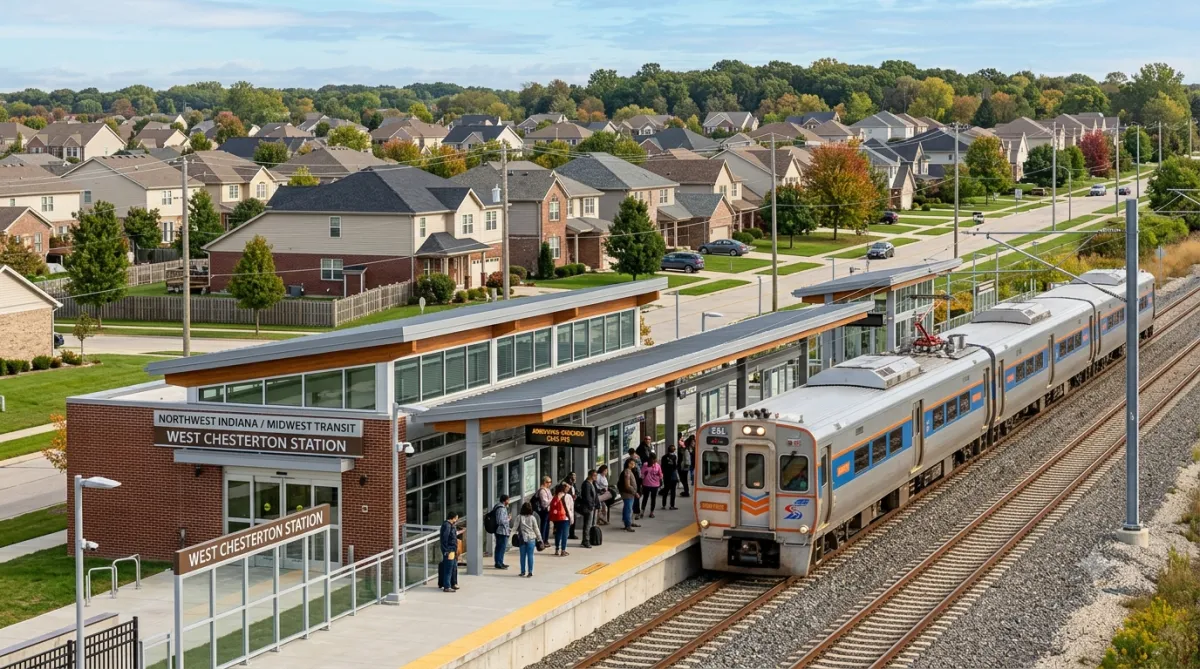
Will the West Lake Corridor Raise Home Values in Munster and Dyer?
Will home values near the new West Lake Corridor stations keep rising in Northwest Indiana?
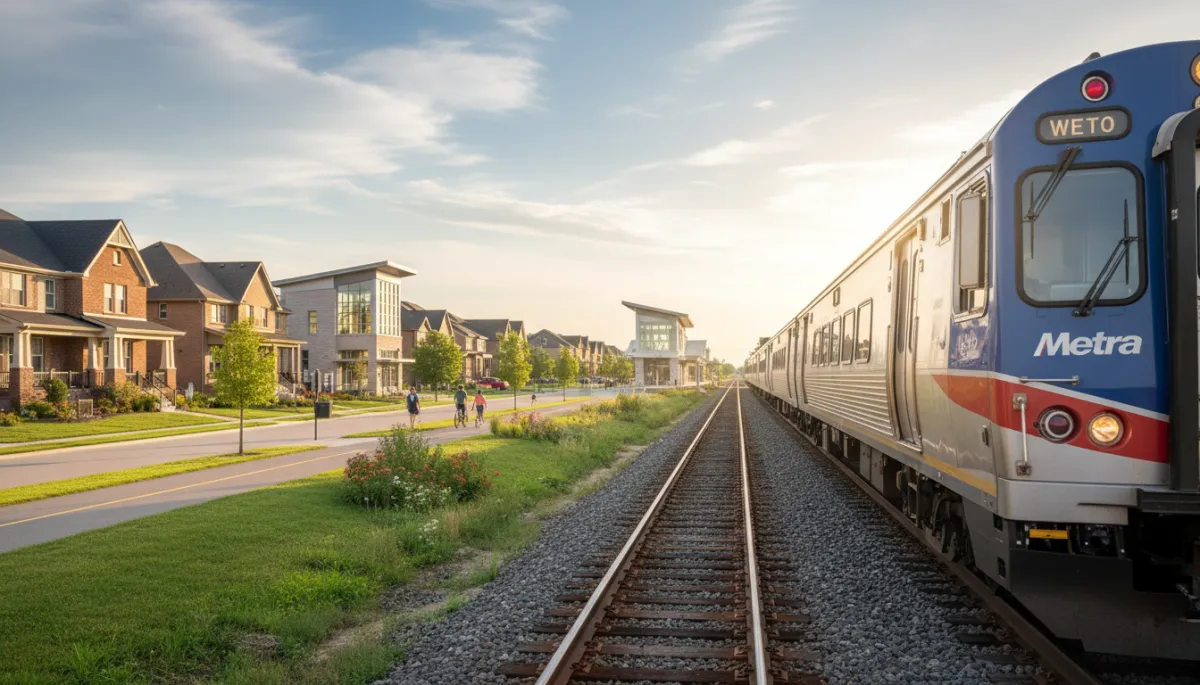
The West Lake Corridor's four new stations — Hammond Gateway, South Hammond, Munster Ridge, and Munster/Dyer — opened for service on March 31, 2026, and early signals point toward higher demand near the line. Transit Development Districts around each stop are designed to concentrate new building and boost nearby property values, though the full price effect will play out over the next several years, not overnight. If you're deciding whether to sell now or buy near one of these stations, the honest answer is: the window to act before the premium fully prices in is open right now — it will not stay open indefinitely.
By Constellation Home Sales | Freedom Group Global| July 11, 2026
Northwest Indiana has spent years as the value play next door to Chicago. That equation just shifted. A one-seat commuter line from Munster and Dyer into downtown Chicago changes who's willing to buy in Lake County, and it changes what they're willing to pay to live near a station instead of a fifteen-minute drive from one.
We're already fielding calls from both sides of this: sellers wondering if they should hold out for the transit bump, and buyers trying to figure out if they're early to a trend or late to the party. Here's what we're telling them.
Why the West Lake Corridor Matters for Your Home's Value
The West Lake Corridor is an 8-mile southern extension of the South Shore Line, running from the existing mainline in Hammond down to the Munster/Dyer border. It gives Lake County residents a direct rail connection into Chicago for the first time, without driving to a station further east.
A few things are worth understanding before you make a decision based on this:
The line is brand new. Service began March 31, 2026, so there is no multi-year sales history yet showing exactly how much of a premium station proximity commands in Munster or Dyer specifically. Anyone who tells you an exact number is guessing.
Transit Development Districts are doing real work. Each station area has a designated district meant to encourage denser residential and mixed-use building close to the platforms. That typically pulls new construction, retail, and amenities toward a walkable radius over time.
Not everyone agrees this is a clean win. Some residents near the corridor have raised concerns about the railroad itself affecting home values — noise, traffic patterns, and construction disruption are real factors, not just upside. A station a quarter-mile away is a different proposition than a station visible from your backyard.
The regional case is strong. State and regional planners are projecting roughly two dollars of economic return for every dollar invested in the corridor. That kind of return typically shows up first in commercial activity and new development, then filters into residential values over a longer timeline.
This is one of the most common questions we're getting on calls and through the site right now, and it's not going away as more commuters test the new schedule.
What This Means If You're Selling Near Munster or Dyer Right Now
Northwest Indiana overall is not a soft market. The median single-family home sold for $290,000 in April 2026, up 9% year over year, and inventory is running about 3% below where it was a year ago. Homes in Crown Point, St. John, and Schererville have been drawing multiple offers regularly this spring.
If your home sits within easy walking distance of Munster Ridge or Munster/Dyer stations, you have a real decision to make:
Sell now and price to the current market, which is already strong on its own merits, without betting on a transit premium that hasn't fully materialized yet.
Hold for a year or two and let the Transit Development District buildout mature, betting that proximity value increases faster than your carrying costs and opportunity cost of not selling.
Neither answer is automatically right. It depends on your timeline, what you'd do with the proceeds if you sold now, and whether you can tolerate construction activity in the surrounding district while you wait. What it should not depend on is a Zestimate — automated valuation models have no way to account for a station that opened four months ago.
If you do sell now, expect a competitive process similar to what we're seeing across Lake County. That means fielding more than one offer isn't unusual, and how you evaluate those offers — factoring in financing strength, contingencies, and closing timeline, not just the top-line number — determines what actually lands in your account. We wrote a longer breakdown of how we structure counteroffers and compare multiple offers on net proceeds, not just price if that's the stage you're headed into.
What This Means If You're Buying Near the New Stations
Buyers moving from Illinois for affordability now have an added reason to look specifically at Hammond, Munster, and Dyer instead of pushing further into Lake or Porter County: you can commute into Chicago by rail without giving up the lower cost of entry Northwest Indiana is known for.
Before you pay a premium for proximity, walk through this:
Confirm the actual walk to the platform, not the straight-line distance. Ten minutes on foot is a very different amenity than a mile that requires a car.
Ask what's planned, not just what's built. The Transit Development District process means retail, parking, and multifamily construction near each station will continue for years. That can be a long-term positive for your home's value and a short-term construction headache.
Get a comparable-sales read that accounts for the timeline. Comps from a year ago don't reflect a corridor that didn't exist yet. Your agent needs to be pulling the most recent closings specifically, not a twelve-month average that buries the shift.
Don't assume every "near the station" listing is equally positioned. Noise exposure, layover yard proximity in Dyer, and platform sightlines vary block by block.
Whatever you decide, closing in Indiana works differently than it does across the state line. Indiana is not an attorney-closing state — your title company or escrow agent runs the closing itself, though you're welcome to bring in an attorney for contract review if you want a second set of eyes. You will not have an Illinois-style attorney review period built into your contract; instead, expect standard inspection, appraisal, financing, and sale-of-home contingencies. At closing, a Sales Disclosure Form (State Form 46021) gets filed with the county auditor along with a small filing fee — confirm the current fee with your title company, since it's set at the county level and varies. That's separate from the Seller's Residential Real Estate Sales Disclosure, the property-condition statement you'll receive as a buyer, or complete as a seller, before an offer is accepted.
Frequently Asked Questions
Has the West Lake Corridor actually raised home prices in Munster or Dyer yet?
There's no established multi-year sales data isolating a station-proximity premium yet, since service only began March 31, 2026. Regional projections point toward long-term value growth around each Transit Development District, and Northwest Indiana's broader market is already up 9% year over year. Still, a stable, measurable "station premium" separate from that broader trend hasn't shown up yet.
Should I wait to sell my house near a station to capture more appreciation?
It depends on your timeline and your tolerance for construction activity in the surrounding district while values firm up. If you need to sell in the next year, price to today's market instead of speculating on a number nobody can confirm yet. If you have flexibility, it's a reasonable bet, not a guarantee.
Do I need an attorney to close on a house near the West Lake Corridor in Indiana?
No. Indiana closings are handled by a title company or escrow agent, not an attorney, though you can involve one for contract review if you want. This is different from Illinois, just across the state line, where attorneys typically run the closing itself.
What is the Sales Disclosure Form and is it the same as a property condition disclosure?
No, they're two different documents. The Sales Disclosure Form (State Form 46021) is a property-tax filing submitted to the county auditor at closing. The Seller's Residential Real Estate Sales Disclosure is a separate statement about the physical condition of the property that has to be delivered before a buyer's offer is accepted.
Is it worth paying more for a house within walking distance of a new station versus a short drive away?
That depends on how much you value the commute time versus the premium, and how comfortable you are with several more years of construction as the Transit Development District builds out. Pull recent comps specifically from listings near the platforms, not a blended average across the whole city, before you decide what "worth it" means for your budget.
Northwest Indiana's rail connection to Chicago is four months old, which means the real premium — or the real risk — for homes near Munster and Dyer's new stations still hasn't fully shown up in the comps. Whether you're weighing a sale now versus waiting, or deciding how much extra to offer for proximity to the platform, you need numbers pulled from what's actually closing near these stations right now, not a citywide average or a guess. Text or call 630-912-9129 and I'll pull the most recent closings near your specific address or the listing you're considering, so you're deciding with real data instead of a hunch.
About the Constellation Home Sales | Freedom Group Global
Steve Roake and Kimberly Genovese have closed more than 615 transactions worth over $113 million across Chicago's southwest suburbs and Northwest Indiana. Licensed since 2003 and operating under Keller Williams Preferred Realty, the team specializes in probate and estate sales, expired listings, negotiation, and divorce and life-transition sales, with a track record of selling homes at 101% of list price against a 97.7% MLS-wide average. Connect with the team at freedomgroupglobal.com or 630-912-9129.
