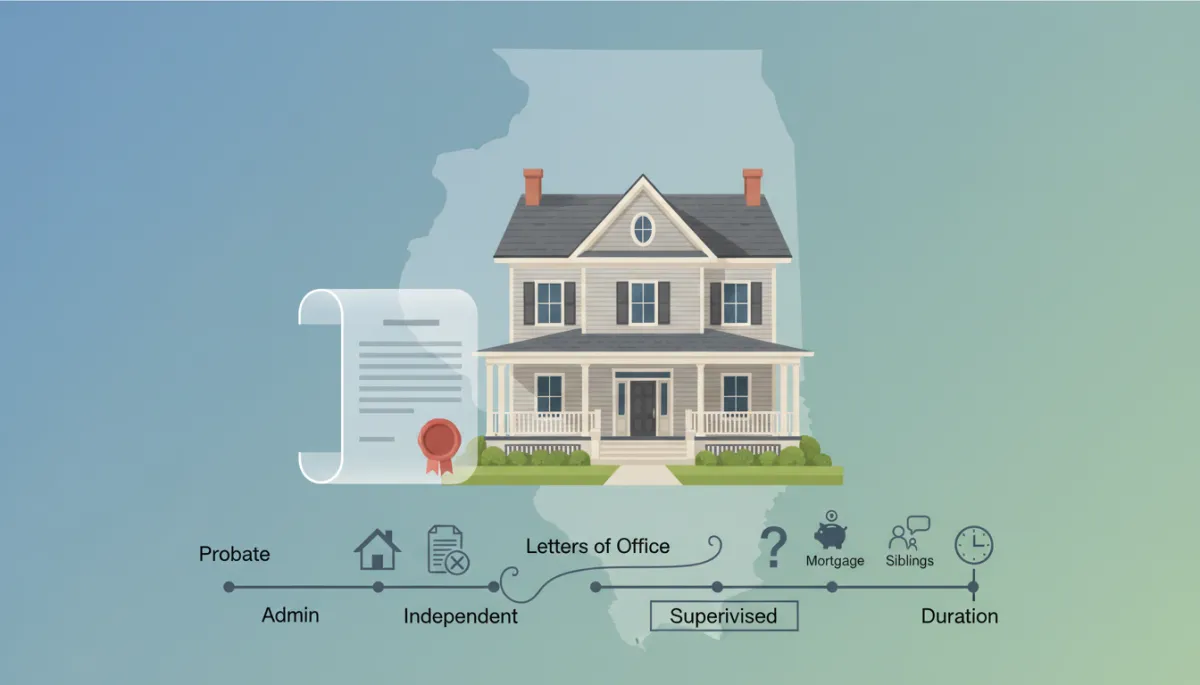
Sell Inherited House in Illinois: Legal Steps & Tips
Illinois Real Estate, Probate, Inherited Property
How to Sell an Inherited House in Illinois: Legal Steps and Practical Guidance
Selling an inherited home in Illinois involves more than finding a buyer. Executors and heirs must navigate probate, understand their legal authority, and coordinate family expectations while preparing the property for the market. This overview explains the key legal concepts and practical steps so you can move forward with confidence.
Understanding the Illinois Probate Process for Real Estate
In Illinois, most inherited houses pass through probate unless they were already held in a trust, transferred by a transfer-on-death instrument, or owned in joint tenancy with survivorship rights. Probate is the court process used to validate the will, identify heirs, pay valid debts and taxes, and ultimately transfer property to beneficiaries or authorize a sale.
The person in charge of the estate is called the executor (if named in a will) or administrator (if there is no will). This individual does not have full authority to sell the house until the court formally appoints them and issues Letters of Office, which prove their legal authority to act on behalf of the estate.
Timeline for Obtaining Letters of Office in Illinois
The timeline to receive Letters of Office varies by county and court workload, but most estates follow a similar pattern. After a death, the executor or an interested party files a petition to open probate, along with the death certificate and the original will (if one exists). The court then schedules a brief hearing to appoint the representative and issue Letters of Office.
In many Illinois counties, Letters of Office can be issued within 4–8 weeks of filing, assuming there are no disputes about the will or who should serve as representative. Complex estates, missing heirs, or contested wills can extend this timeline. Until Letters of Office are issued, you may discuss the property with real estate professionals, but you generally cannot sign a binding listing agreement or sales contract on behalf of the estate.
Independent vs. Supervised Administration: How It Affects a Sale
Illinois law recognizes two main types of probate administration: independent and supervised. The type granted by the court significantly affects how quickly and easily you can sell the inherited house.
Independent administration allows the executor or administrator to act with minimal court involvement. In many cases, they can list and sell the property without seeking separate court approval for each step, so long as they act in the best interest of the estate and follow statutory requirements.
Supervised administration requires more direct court oversight. The representative may need court permission before signing a listing agreement, accepting an offer, or closing the sale. This additional oversight can protect heirs in contentious situations but often lengthens the sale timeline.
When possible, courts and attorneys often prefer independent administration because it reduces cost and delay. However, if there is significant conflict among heirs, questions about the will, or concerns about how the estate will be managed, the court may require supervised administration to ensure transparency and fairness.
Illinois Residential Real Property Disclosure Act: Estate Sale Exemption
Illinois sellers typically must provide a detailed disclosure form under the Illinois Residential Real Property Disclosure Act, describing known material defects in the home. However, there is a specific exemption for certain estate-related transfers. In many inherited-property sales, the executor or trustee is not required to complete the standard disclosure form because they did not occupy the property and may not have personal knowledge of its condition.
Despite this exemption, buyers often still conduct thorough inspections, and many estate representatives choose to share any known issues to avoid misunderstandings. The exemption relieves the estate of filling out the statutory form, but it does not permit intentional concealment of known, significant problems. Your attorney or real estate professional can clarify whether the exemption applies to your specific transaction and ensure that all required notices are handled correctly.

Thoughtful preparation and staging often shorten market time and support stronger offers.
Practical Tips for Preparing an Inherited House for Sale
While legal steps move forward, you can begin preparing the property so it is ready to list once you have authority to sell. A structured approach helps preserve value and reduce stress for the family.
Secure and insure the property. Change locks if appropriate, confirm that homeowners insurance remains in place, and notify the insurer that the home is now part of an estate to avoid coverage gaps.
Sort personal belongings methodically. Create a clear plan for dividing, donating, or disposing of contents. Document items of sentimental or financial value, and coordinate with heirs before major decisions are made.
Address basic maintenance. Mow the lawn, clear snow, clean gutters, and handle obvious repairs such as leaking faucets or broken steps. These relatively small efforts can significantly improve first impressions.
Consider cost-effective updates. Fresh paint in neutral colors, deep cleaning, and minor cosmetic improvements often provide a good return, especially in older homes. Before undertaking larger projects, consult your attorney and real estate agent to ensure the estate will recover the cost.
Engage experienced professionals. A real estate agent familiar with estate sales, along with a knowledgeable Illinois probate attorney, can coordinate timing, paperwork, and buyer expectations so the sale proceeds smoothly.
Selling an Inherited House with an Existing Mortgage
Many inherited homes still have a mortgage or home equity loan. In most cases, the loan does not have to be paid off immediately upon the owner’s death. Instead, the lender continues to expect payments, and the loan is typically satisfied from sale proceeds at closing. The title company will obtain a payoff statement, and the lender will be paid before any net funds are distributed to the estate or heirs.
If the estate will not make ongoing payments, communicate with the lender and your attorney promptly. Some families choose to maintain payments to avoid late fees and protect the property from foreclosure during probate. If the mortgage balance is greater than the home’s value, your attorney can advise on options such as negotiating with the lender or considering a short sale, subject to court approval where required.
Managing Sibling Disagreements and Heir Conflicts
It is common for siblings or co-heirs to have different views about selling an inherited house. Some may prefer to keep the home, others may want to sell quickly, and still others may focus on maximizing price, even if that means delaying the sale. These disagreements can slow probate and complicate negotiations with buyers if not addressed early.
The executor or administrator has a fiduciary duty to act in the best interest of the estate as a whole, not any individual heir. Clear communication, written summaries of recommendations from real estate professionals, and, when appropriate, mediation can help align expectations. In more serious disputes, the court can resolve conflicts or authorize a sale over objections if it is necessary to pay debts or distribute the estate fairly. Documenting decisions and keeping heirs informed can significantly reduce tension and the risk of later challenges.
Typical Duration of Probate Before You Can Sell in Illinois
The overall probate process in Illinois commonly lasts six to twelve months, though simple estates may close more quickly and complex or contested estates can extend well beyond a year. From a practical standpoint, you can usually list and sell the property once:
The court has opened the estate and issued Letters of Office, and
The type of administration (independent or supervised) and any special restrictions are clear.
In an independent administration with no disputes, it is not unusual for a representative to list the home within a few months of opening probate and close the sale as soon as a qualified buyer is found and title work is complete. In a supervised administration, additional court hearings and approvals can add several weeks or months to the timeline. Planning ahead with your attorney and agent helps coordinate court dates, buyer expectations, and closing logistics.
Moving Forward with Confidence
Selling an inherited house in Illinois is both a legal process and a practical project. Understanding probate, securing Letters of Office, recognizing the difference between independent and supervised administration, and applying the estate-sale disclosure exemption correctly all help protect the estate and its beneficiaries. At the same time, careful preparation of the property, clear communication among siblings, and early coordination with lenders and professionals can streamline the sale and reduce stress during an already difficult time.
Need help with your inherited house? Contact Constellation Home Sales | Freedom Group Global.
