
NWI School Referendums: Impact on 2026 Property Taxes
Northwest Indiana, Property Taxes, School Referendums, 2026 Elections
Will NWI School Referendums Raise Your Property Taxes in 2026?
School referendum questions are likely to crowd the November 3, 2026 ballot in Northwest Indiana, but whether a “yes” vote actually raises your property tax bill is more complicated than the mailers and yard signs make it sound. Here’s a clear, homeowner-focused guide to what’s coming, how Indiana’s tax caps work, and what buyers and sellers in Lake, Porter, and La Porte counties should think about before November.
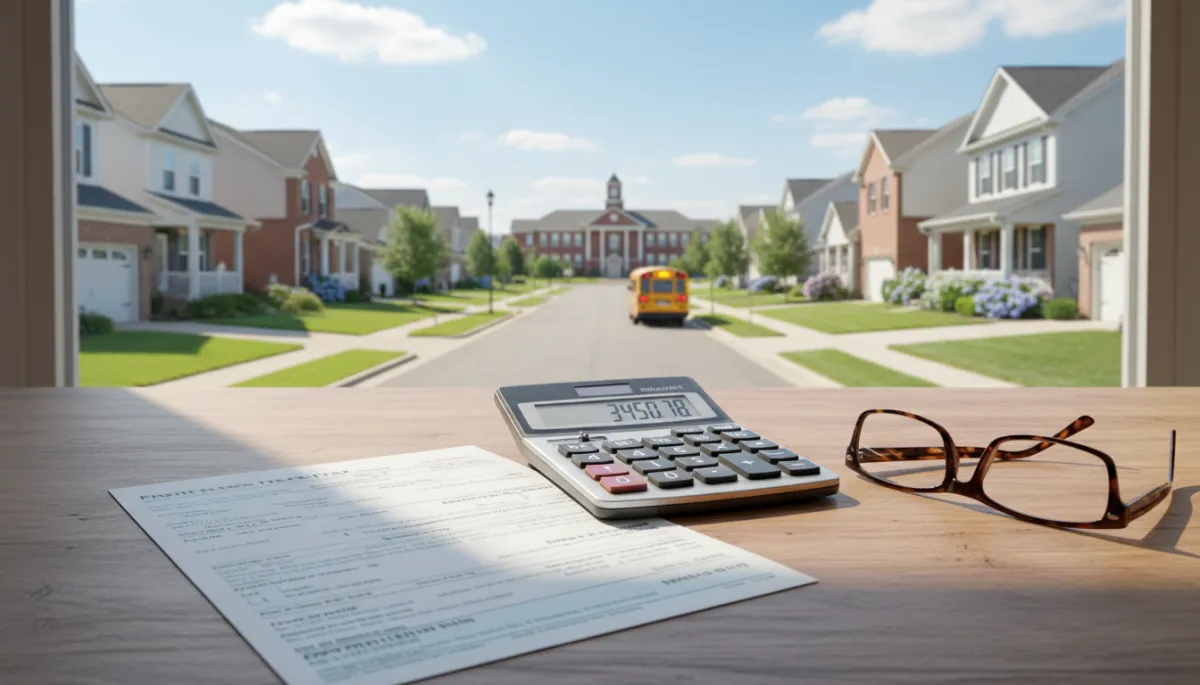
Will School Referendums Raise Your NWI Property Taxes?
What 2026 ballot questions could mean for your actual bill
1. Will School Referendums Raise Your Property Taxes in Northwest Indiana This Year?
Across Indiana, 2026 is shaping up to be a record year for school referendums. Statewide, public school advocates expect anywhere from 40 to 100 districts to ask voters for extra property tax support on the November 3 ballot, according to reporting from Indiana Public Radio and Chalkbeat Indiana. That surge is a direct response to recent state-level property tax relief, especially Senate Enrolled Act 1 (SEA 1), which expanded homestead deductions and cut into local school revenue.
Northwest Indiana is part of that wave. Districts in Lake, Porter, and La Porte counties are watching the same state reforms squeeze their budgets while transportation, utilities, and staffing costs continue to rise faster than inflation. As of late July 2026, the final list of NWI districts with referendum questions is not yet public. Under Indiana law, school corporations have until August 1 to lock in ballot language with the Department of Local Government Finance (DLGF), so homeowners should expect clarity later this summer rather than right now.
📌 Key Takeaway: Referendums are very likely on the ballot in multiple NWI districts this November, but the exact list and rates will not be final until the DLGF’s August 1 deadline.
2. Why So Many NWI School Districts Are Headed to the Ballot at Once
Two big shifts in Indiana law collided to create the pileup you’re seeing on your 2026 ballot:
New timing rules for referendums. School corporations used to be able to ask for referendum funding in many different election cycles. Now, they are limited to November general elections in even-numbered years only. That means 2026 is the one shot for districts whose existing referendums are expiring or whose budgets can’t stretch further under new state rules (indianapublicradio.org).
State property tax relief that shrinks school revenue. SEA 1 and related laws expanded homestead deductions and other credits starting with taxes payable in 2026. Those changes are good news for homeowners’ base bills, but they mean less money flows to schools from the same tax base. Analysts estimate that districts statewide could lose up to hundreds of millions of dollars by 2028 because of these reforms (indianapublicradio.org).
Put simply, the same laws that lowered many homeowners’ 2026 tax bills are also the reason your local district is now asking for a referendum. In many cases, districts are not chasing new programs; they are trying to backfill dollars they already lost to caps, deductions, and credits, so they can keep current class sizes, bus routes, and course offerings in place.
💡 Pro Tip: When you see “renewal” on a referendum mailer, read it as “keep doing what we’re already doing,” not “add something brand new.” That context matters when you weigh the trade-off.
3. The Three Types of School Referendums in Indiana
Under Indiana law, school referendum questions fall into three main categories. Knowing which type your district is proposing helps you understand where the money would go:
1. Operating referendums
These are the most common questions on 2026 ballots. They fund day-to-day operations such as teacher salaries, support staff, transportation, utilities, and curriculum. Many NWI and central Indiana districts are pursuing operating referendums to offset SEA 1 losses.
2. Capital referendums
Capital questions cover buildings and major projects: new schools, additions, roof replacements, HVAC systems, and similar long-lived improvements. These are usually framed around safety, overcrowding, or aging facilities.
3. Safety referendums
Safety referendums focus on school security and student well-being—things like school resource officers, mental health staff, security equipment, and training. They are narrower than general operating questions but still show up as an additional rate on your tax bill if approved.
Most of the 2026 proposals, in NWI and statewide, are expected to be operating referendums. That matters because operating dollars are what keep the current system running; cuts there tend to show up quickly in staffing levels, bus routes, and course options.
4. How the 1% Circuit Breaker Cap Works with School Referendums
One of the most confusing pieces of Indiana tax law is the 1% circuit breaker cap for homesteads. Here’s the basic idea:
For an owner-occupied home (a homestead), your base property tax bill cannot exceed 1% of your gross assessed value after deductions and credits are applied.
If the combined rates of all local taxing units (city, county, school, library, etc.) would push your bill above that 1% limit, the state issues a “circuit breaker” credit to bring your bill back down to the cap.
Where do referendums fit in? This is where you’ll hear two different explanations:
Standard explanation from state resources: Indiana’s DLGF notes that voter-approved referendum rates are not protected by the regular caps. In other words, referendum taxes can sit on top of the 1% limit, which is why ballot language is required to show the estimated dollar impact on a median home (in.gov).
How it feels locally in many NWI townships: In practice, homeowners often see that a new referendum rate doesn’t raise their bill by the full advertised amount, especially in places where bills are already pressed up against the 1% cap. That’s because the new rate can displace other local rates within the same ceiling, shifting which entities get paid but not always adding a full new layer of tax for you personally.
The key is your starting point:
If your current bill is already at or very near the 1% homestead cap, a new referendum might result in only a modest change to what you pay, even though it changes how the total is divided among local units.
If your bill is well below 1%, you have more “room” underneath the cap. In that case, a successful referendum is more likely to show up as a direct, noticeable increase in your bill.
📌 Key Takeaway: The 1% cap limits your base bill, but voter-approved referendum taxes can still push your total higher. Whether they do—and by how much—depends on how close you already are to that cap.
5. How the New 10% Homestead Credit and 2026 Tax Changes Fit In
Many NWI homeowners opened their 2026 tax bills and saw lower numbers than in 2025, thanks to SEA 1 and related reforms. One of the most visible changes is a new 10% homestead credit, layered on top of existing homestead deductions and other relief programs. At the same time, Indiana is rolling out:
Expanded homestead deductions that reduce the taxable portion of your home’s assessed value (web.indianacounties.org).
A four-year cyclical reassessment process starting July 1, 2026, which will gradually update property values for taxes payable in 2027 and beyond (in.gov).
Additional relief and transparency tools, including a Property Tax Transparency Portal that lets you compare current and projected bills (indianahouserepublicans.com).
The important point for referendum season is this: the 10% homestead credit and other relief do not “cancel out” a referendum increase dollar for dollar. They are calculated separately and then combined on your final bill. You might see that your overall bill is still lower than it would have been without SEA 1, even if a referendum passes—but that doesn’t mean the referendum had no cost. It means state-level relief and local-level increases are pulling in opposite directions at the same time.
6. Real-World Impact on Homeowners in Lake, Porter, and La Porte Counties
Even before the 2026 ballot, Northwest Indiana homeowners have seen how school referendums translate into actual dollars. In recent years:
Districts like Lake Central in Lake County pursued renewal referendums with rates around a few dozen cents per $100 of assessed value, which passed with solid voter support. For a $200,000–$300,000 home, that kind of rate can mean several hundred dollars per year in additional taxes, depending on deductions and caps.
Other NWI districts, such as Duneland or Hanover, have also used referendums in recent cycles to stabilize staffing, transportation, and safety initiatives when state funding lagged behind local needs (in.gov).

For many NWI households, school referendums shift annual costs by several hundred dollars, not just a few spare change.
Looking ahead to 2026, the impact in Lake, Porter, and La Porte counties will likely follow the same pattern:
Homes closer to the 1% cap may see smaller changes in their final bill, even if referendum rates look large on paper, because some of those dollars displace other local taxes.
Homes with more room under the cap are more exposed to the full effect of new referendum rates, particularly if they lack certain deductions or credits they qualify for but haven’t filed.
💡 Pro Tip: Before you assume a countywide average applies to you, pull your own parcel and confirm whether your current bill is already at the 1% cap. That one detail changes the math more than any statewide statistic.
7. What a “Yes” Vote Actually Does to Your Tax Bill
When you see a school referendum on your ballot in November, the question will include two key pieces of information by law: the proposed rate per $100 of assessed value and an estimated annual increase for a median-value home in the district (Indiana Code 20-46-9-9). Here is what a “yes” vote means in practice:
The district is authorized to add the stated referendum rate to its local tax rate, usually for up to eight years for operating questions.
That rate is applied to your home’s net assessed value (after deductions) to calculate the gross referendum tax for your parcel.
The circuit breaker cap, homestead deductions, and credits—including the new 10% credit—are then applied to determine your final bill.
Because those last steps vary from parcel to parcel, there is no honest way to say, “If the referendum passes, everyone’s bill will go up by $X.” The only accurate answer is: it depends on your assessed value, your current deductions and credits, and where your bill sits relative to the 1% cap.
📌 Key Takeaway: A “yes” vote authorizes a new rate. How much of that rate you actually feel is unique to your parcel. Treat ballot examples as illustrations, not guarantees.
8. How to Check the Impact on Your Specific Parcel
If you want a clear picture of how a 2026 school referendum could affect your bill in Lake, Porter, or La Porte county, here’s a straightforward checklist:
Find your school corporation name on your most recent property tax bill. Don’t rely on your city or township name alone; school district boundaries often cut across municipal lines.
After August 1, visit the DLGF’s referendum information page and look up your district’s official ballot language and proposed rate (in.gov).
Call your county auditor’s office or ask your title company whether your current bill is already at the 1% circuit breaker cap. This one detail dramatically changes how much of the referendum you will feel.
Confirm that both your homestead deduction and the new 10% homestead credit are properly filed and showing on your bill. A missing deduction can magnify the impact of any new rate on top of it.
💡 Pro Tip: Many districts publish online calculators that let you plug in your assessed value and see a customized estimate. If your NWI district offers one, use it as a starting point and then verify with your auditor for extra accuracy.
9. Advice for Homeowners Selling Before the November 2026 Vote
If you’re planning to list a home in Lake, Porter, or La Porte county this fall, a pending school referendum is going to show up in buyers’ research right alongside days on market and comparable sales. Here’s how to handle it strategically:
Expect the question. Serious buyers—or their agents—will ask whether your district has an active or proposed referendum. Shrugging and saying, “I’m not sure,” undercuts your credibility at the negotiating table. Spend a few minutes confirming the basics now so you can answer calmly later.
Understand timing. Selling before November does not automatically help you or hurt the buyer. Referendum outcomes typically feed into the following year’s tax cycle, so a home that closes in September 2026 still carries the same underlying assessment and district rate structure a buyer will inherit either way. What changes is certainty: a buyer closing after the vote knows the outcome; a buyer closing before is making a decision with one more open variable.
Frame it honestly. Instead of trying to gloss over the ballot question, acknowledge it and highlight the value side: strong schools, stable programs, and the district’s track record on academics or extracurriculars. Buyers who care about schools often see a reasonable referendum as part of the cost of a high-performing district.
10. Advice for Buyers in NWI Before the November Vote
For buyers, a pending referendum should be treated the same way you’d treat a mortgage rate lock or HOA dues: it’s one more line item in your monthly payment math, not an automatic dealbreaker. Here’s how to approach it:
Ask your agent whether the district already has a current referendum rate baked into the 2026 bill, is seeking an early renewal, or is asking for a brand-new rate. That’s a five-minute lookup once the August 1 list is final and should sit in the same conversation as price, taxes, and insurance estimates.
Use the district’s or DLGF’s median-home example as a starting point, then adjust for your own price range. If the ballot says a $250,000 home would see a $300 annual increase, a $350,000 home may see something proportionally higher, subject to caps and deductions.
Compare the estimated referendum cost to the overall value of the district—test scores, amenities, resale demand, and days on market. In fast-moving NWI submarkets, buyers often find that a modest tax premium in a strong district pays for itself in long-term appreciation and easier resale.
💡 Pro Tip: When you run affordability numbers, model both scenarios—referendum passes and referendum fails. If the higher-tax scenario still fits comfortably in your budget, you’ve de-risked one more variable before you write an offer.
11. So, Will NWI School Referendums Raise Your Property Taxes in 2026?
The honest answer is nuanced:
Yes, at the community level. If your district passes a referendum this November, total local property tax collections will rise for that district, by design. That is how schools offset state-level cuts from SEA 1 and related reforms.
Maybe, at the individual level. Whether your specific bill goes up—and by how much—depends on your assessed value, your deductions and credits, and whether you are already at or near the 1% homestead cap. Two neighbors on the same street can see different percentage changes, even under the same referendum.
For homeowners and buyers in Lake, Porter, and La Porte counties, the most productive move is not to fixate on statewide averages, but to:
Confirm whether your district has a 2026 referendum and what type it is (operating, capital, or safety).
Check your own parcel’s status relative to the 1% cap and make sure all eligible deductions and credits are in place.
Weigh the estimated cost against the value of stable, well-funded schools—for your household, for your neighborhood, and for the long-term strength of Northwest Indiana’s housing market.
Northwest Indiana’s market remains active across most price bands, and school quality continues to be one of the top drivers of buyer interest. This November’s referendum questions are not the only factor worth weighing, but they are too important to ignore. Take an hour now to understand how the rules work, look up your own numbers, and walk into the voting booth with clarity about what a “yes” or “no” means for your household in 2027 and beyond.
Frequently Asked Questions: NWI School Referendums & Property Taxes
Do school referendums last forever once they pass?
No. Most operating referendums in Indiana are approved for a set term, typically up to eight years. When that term ends, the rate expires unless the district returns to voters for a renewal. Capital and safety referendums also have defined timeframes spelled out in the ballot language.
If my home value goes up, will a referendum hit me harder?
A higher assessed value generally means more exposure to any tax rate, including a referendum. However, the 1% circuit breaker cap and your deductions can limit how much of that higher value actually turns into tax. Homes already at the cap may not feel the full effect of rising values or new referendum rates.
Are rental properties and second homes treated the same as my primary residence?
No. Indiana gives owner-occupied homes (homesteads) the 1% cap and homestead deductions. Rental properties, second homes, and most other residential investments fall under a 2% cap and do not receive the same homestead benefits. That means referendums can have a larger impact on non-homestead properties.
Does a “no” vote guarantee my taxes stay the same?
Not necessarily. A failed referendum blocks that specific rate increase, but your bill can still change because of reassessment, shifts in other local tax rates, or changes in deductions and credits. A “no” vote only answers the referendum question; it doesn’t freeze your overall tax bill.
How can I tell if my current bill is already at the 1% cap?
Look for a line on your tax statement labeled “circuit breaker credit” or similar wording. If you see a significant credit amount, you are likely at or near the cap. When in doubt, call your county auditor’s office and ask them to confirm your parcel’s cap status.
Will the new 10% homestead credit show up automatically?
The 10% credit applies only if your property is correctly filed as a homestead. If your homestead deduction is missing or your mailing address suggests the property is not owner-occupied, you may not receive it automatically. Verify your status with the auditor and file any missing paperwork as soon as possible.
Do strong schools always mean higher property taxes?
Not always, but there is often a trade-off. High-performing districts may use referendums to maintain programs and staffing, which can raise taxes. At the same time, those districts tend to attract more buyers, support higher sale prices, and offer stronger long-term resale value—benefits that can offset some or all of the added tax burden.
