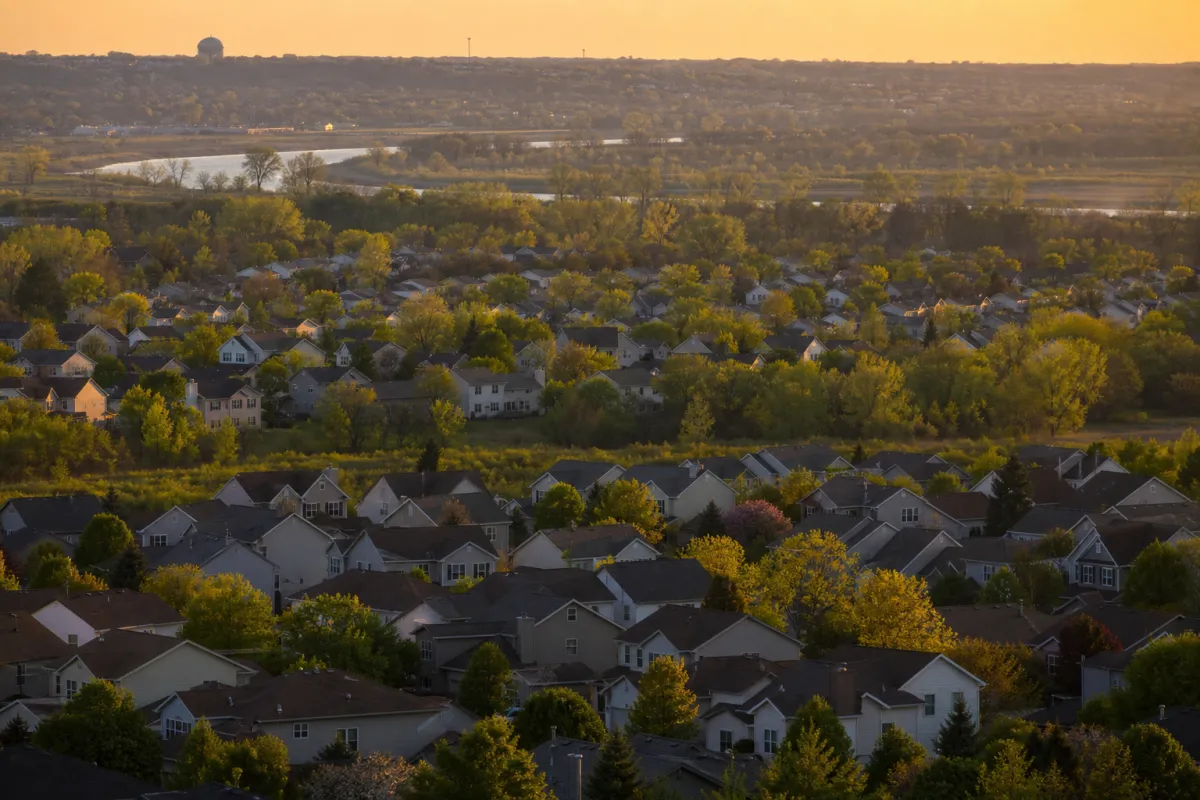
Crest Hill Sellers to Avoid Pricing Pitfalls
Crest Hill sellers who overprice from day one risk sitting on the market, attracting lowball offers, and ultimately netting less than a correctly priced home would have earned. A comp-driven price set before listing is the single most effective tool a Crest Hill seller has.
What pricing mistakes do Crest Hill sellers most commonly make?
The most common mistake for Crest Hill sellers to avoid is starting too high and planning to negotiate down. In a market where recent local data shows a median of 48 days on market, an overpriced home doesn't attract strong offers, it attracts silence, and then skepticism once the price drops. Getting the number right on day one is the difference between riding buyer interest and chasing it.
Key Takeaways
Recent local market data shows Crest Hill's median sale price at $300,000 and median days on market at 48, meaning correctly priced homes still move, but overpriced ones stall fast.
The Chicago Metro Area median home price was $395,000 in August 2026, according to Illinois REALTORS®, a useful benchmark, but not a substitute for a Crest Hill-specific comparable sales analysis.
Pricing above market to "leave room to negotiate" typically costs sellers more than it saves, buyers who see a stale listing assume something is wrong with the house, not the price.
A price reduction is not always the fix: if a home gets few showings, the problem may be photos, condition, or marketing access, not the number alone.
Closed comparable sales, not active listings, are the right foundation for an asking price, because they show what buyers actually paid, not what sellers hoped to get.
Why is overpricing the first trap for Crest Hill sellers to avoid?
Here's the honest truth about how buyers shop: they don't wait. When a new listing hits the MLS, it lands in the saved searches and alert emails of every active buyer whose criteria it matches. That first wave of attention, the first two weeks, is the most concentrated buyer interest a listing will ever see. If the price sends those buyers elsewhere, the listing sits. And a listing that sits starts to carry a question mark that no price cut fully erases.
Recent local market data puts Crest Hill's median days on market at 48. That's not a bad number, but it means the window for peak attention is real and finite. Homes priced accurately from the start tend to close within or near that window. Homes that start too high and reduce later often end up well past it, and at a lower price than they would have gotten had they been positioned correctly on day one.
Illinois REALTORS® reported that the Chicago Metro Area had 14,028 homes for sale in August 2026, down 11% from a year earlier. Fewer listings means buyers have less to compare, but it also means your competition is more visible. Buyers who see two similar homes in Crest Hill will compare them directly, and the one priced closer to reality gets the showing.
We walk every Crest Hill seller through this dynamic before we set a number. The goal isn't to anchor high and hope, it's to price where the home will actually sell, so you capture that first-wave energy instead of watching it pass.
What does "pricing room to negotiate" actually cost you?
The logic sounds reasonable: list at $325,000, expect to land at $310,000, and feel like you negotiated well. The problem is that buyers who see a home priced above market don't usually offer below asking, they skip it entirely and move on to a home that feels fairly priced. The ones who do engage often come in with aggressive lowballs, because a stale listing signals a motivated seller.
We've watched this play out enough times that we don't recommend it. Padding the price to leave room doesn't protect your net, it usually reduces it, because you've narrowed your buyer pool and extended your carrying costs in the process. Illinois Legal Aid Online notes that sellers should set a listing price based on the market, and that framing is exactly right: the market sets the price, not the seller's preferred outcome.
How should Crest Hill sellers build a defensible asking price?
A defensible price starts with closed sales, not active listings. Active listings show you what your competition is asking; closed sales show you what buyers actually paid. Those are very different data points, and conflating them is one of the most common errors we see in DIY pricing attempts.
When we run a comparative market analysis for a Crest Hill property, we work from a defined methodology: a roughly one-mile radius, homes within about 20% of the subject's square footage, matched within one bedroom and one bathroom, and as closely aligned as possible on age, garage configuration, and basement finish. We separate detached single-family homes from townhomes and condos, they're different buyer pools and they don't comp against each other cleanly.
Pending sales are worth reviewing too. They give a more recent read on buyer behavior than closed sales, even if the final prices aren't yet public. Combined with a look at current active inventory, you get a picture of what buyers are choosing and what they're passing on.
The metro-wide numbers from Illinois REALTORS® provide useful context, the Chicago Metro Area median was $395,000 in August 2026, up 5.3% year over year, but those figures can't establish a defensible price for a specific Crest Hill address. That requires current local comps, and that's exactly what we build before every listing conversation.
How does Crest Hill compare to nearby markets right now?
Putting Crest Hill in context helps sellers understand where they sit relative to the broader Will County and southwest suburbs landscape. The table below uses recent local market data (trailing approximately 90 days, as of September 2026) for several of the areas we serve:
Area | Median Sale Price | Median Days on Market |
|---|---|---|
Naperville | $625,000 | 22 |
Plainfield | $395,000 | 50 |
Bolingbrook | $385,000 | 47 |
Romeoville | $330,000 | 46 |
Crest Hill | $300,000 | 48 |
Joliet | $319,995 | 34 |
Oswego | $432,500 | 26 |
Montgomery | $334,500 | 53 |
These are area-level medians, an individual home's value varies by condition, street, updates, and timing. But the table illustrates something important: Crest Hill sits at a price point where buyers have real alternatives nearby. A home priced above what the comps support isn't just competing with other Crest Hill listings, it's competing with Romeoville, Joliet, and Bolingbrook homes that may offer more for the same money. That's the competitive reality that makes accurate pricing so critical here.
What should Crest Hill sellers do when a home isn't getting offers?
A price reduction is not automatically the answer. Before adjusting the number, it's worth diagnosing why the home isn't moving, because the fix has to match the problem. Knowing which pitfalls for Crest Hill sellers to avoid extends past the listing appointment: it applies just as much when you're two or three weeks in and the phone isn't ringing.
We look at four things when a listing isn't performing:
Showing volume. If buyers aren't scheduling showings, the listing isn't reaching them or isn't compelling them to act. That points to photography, listing description, or marketing reach, not necessarily price.
Showing feedback. If buyers are walking through and not offering, and their feedback consistently mentions value, that's a pricing signal. If they're citing condition, that's a different conversation.
Online engagement. Low views or saves relative to comparable listings can indicate the photos or presentation aren't doing the job.
Comparable activity. If similar homes nearby are going under contract and yours isn't, the price gap is real and a reduction is likely warranted, but it should be sized to close that gap, not just move the number slightly.
We tell sellers before we list: agree in advance on what signals will trigger a strategy review. Showing volume, feedback patterns, and what competing homes are doing are all inputs. An arbitrary "reduce by X% after Y days" rule ignores all of that. The right move depends on current evidence, not a calendar.
The Illinois REALTORS® June 2026 report showed 9,927 closed sales metro-wide, up 3.9% year over year, which tells us buyers are active. When a home sits in a market where buyers are moving, the listing itself is usually the variable worth examining first.
Your specific situation, your home's condition, its position relative to current Crest Hill comps, and what the active competition looks like right now, is what determines the right next step. That's a conversation worth having before you make any move.
If you've been thinking about what your Crest Hill home is worth in today's market, we're glad to run a no-obligation comparative market analysis. Schedule a strategy session with us and we'll walk through the comps together, no pressure, just numbers. You can also get a quick starting point with a free home valuation to see where your home stands before we talk.
We'd also invite you to read what past clients have said about working with us on Google, Zillow, and Realtor.com.
Frequently Asked Questions
Should I price my Crest Hill house above market value to leave room for negotiation?
No, this strategy typically costs sellers more than it saves. Buyers who see an overpriced home tend to skip it rather than negotiate, which shrinks your buyer pool and extends your time on market. A home that sits too long starts to carry stigma that no price cut fully removes, and you often end up accepting less than you would have with an accurate opening price.
How do I price my Crest Hill home correctly before listing?
Start with a comparative market analysis built from recent closed sales, not active listings, which only show what sellers are asking, not what buyers are paying. The analysis should match your home on size, bedroom and bathroom count, age, garage, and basement, within roughly a one-mile radius. Current pending sales and active competition round out the picture, and a local agent who knows the Crest Hill market can weight those inputs correctly.
What happens when a home is priced too high in the Chicagoland market?
An overpriced home misses the concentrated buyer attention it gets in its first two weeks on the market, the period when it reaches the most active, motivated buyers. After that window closes, the listing accumulates days on market, buyers start asking what's wrong with it, and any eventual price reduction rarely recovers the lost momentum. Illinois REALTORS® data shows buyers are active in this market, an overpriced listing is the variable that keeps them away.
How can I tell whether a price reduction is needed or whether the problem is photos, condition, or marketing?
Look at your showing volume and feedback separately. If buyers aren't scheduling showings at all, the issue is likely presentation or marketing reach, not price. If buyers are touring but not offering, and their feedback consistently points to value, that's a pricing signal. A price cut should be sized to close the gap with current comps, not just move the number slightly to create the appearance of action.
Should I use recent comparable sales or active listings to set my asking price?
Closed comparable sales are the foundation, they show what buyers actually paid, which is the only number that matters at closing. Active listings show your competition and help you understand what buyers are comparing you against, but they don't prove value on their own. Pending sales can give a more current read on buyer behavior, even before final prices are public. Use all three together, weighted toward the most recent closed sales.
About Constellation Home Sales | Freedom Group Global
Steve Roake, REALTOR®, ABR®, SFR®, and Kimberly Genovese, REALTOR®, lead Constellation Home Sales | Freedom Group Global, a real estate team at Keller Williams Preferred Realty in Orland Park, Illinois. Steve has been licensed since 2003 with licenses in Illinois and Indiana; Kimberly has been licensed in Indiana since 2004. The team serves Will, Cook, DuPage, Grundy, Kane, and Kendall counties in Illinois and Lake, Porter, Newton, Jasper, and La Porte counties in Northwest Indiana, and has closed 615+ transactions representing more than $113 million in sales volume.
Equal Housing Opportunity. Steve Roake and Kimberly Genovese are licensed Real Estate Brokers in Illinois and Indiana, regulated by the Illinois Department of Professional and Financial Regulation (IDFPR). This article is general information only and does not constitute legal, tax, or financial advice, confirm your specific numbers with your closing agent, tax advisor, or lender.
